

Mother and daughter in Palermo, Buenos Aires, Christmas 2011
Best wishes everyone!…..see you in 2012!
Mother and daughter in Palermo, Buenos Aires, Christmas 2011
Best wishes everyone!…..see you in 2012!
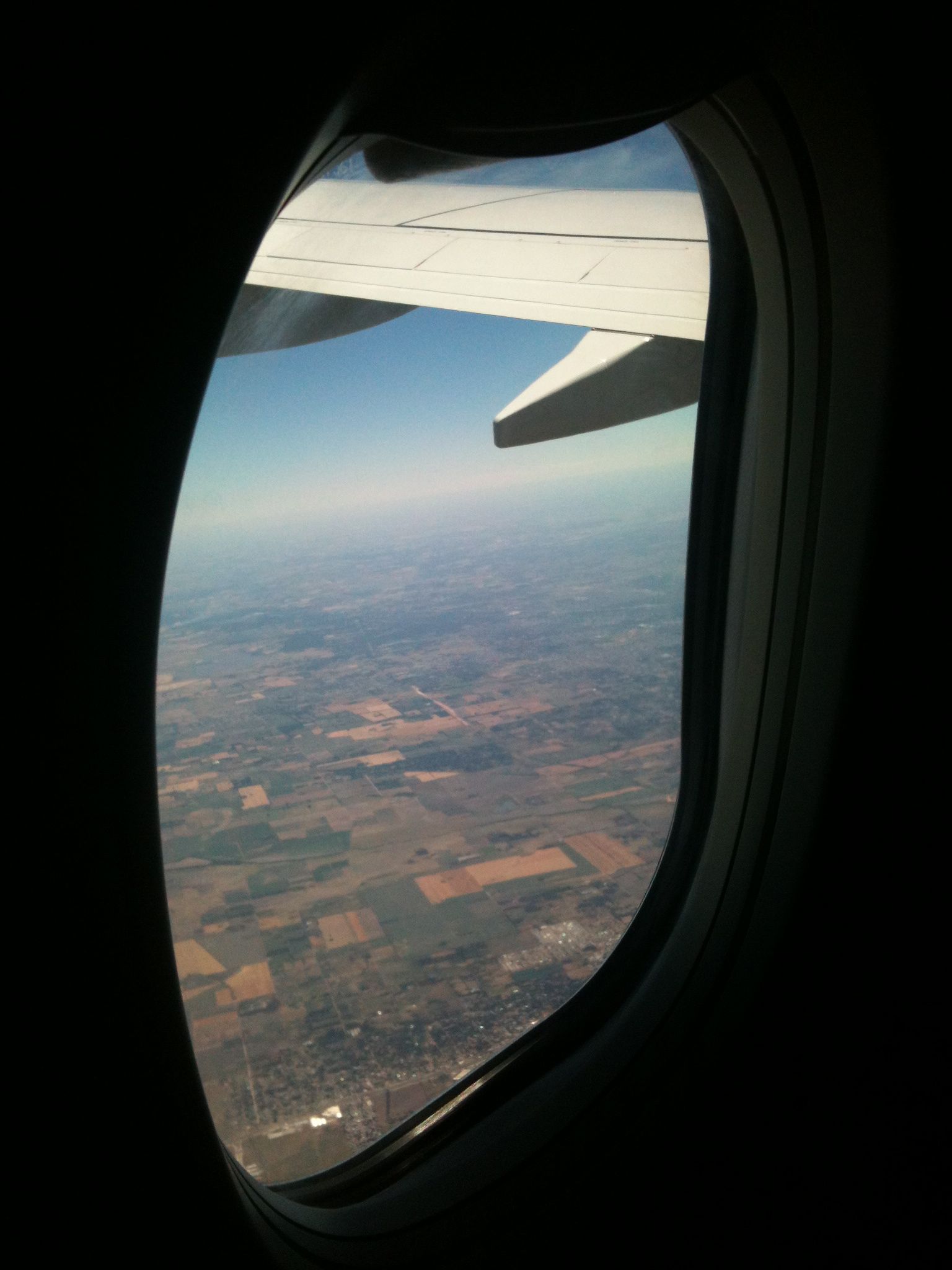
…heading north, somewhere over Buenos Aires province….and back home.
Ezeiza airport, Buenos Aires –
I included my trip back to Argentina after a 33 – year absence in this blog on photography, because I wanted a space to process how photography helps us understand and know our experiences.
La Bodega del Medio is the legendary bar/restaurant in La Havana once frequented by Ernest Hemingway that has it’s walls completely covered by the signatures of patrons.
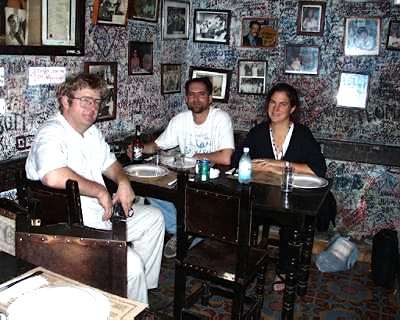
In the middle: with my friends from College of the Atlantic, Gray and Suzanne at Bodega del Medio, La Havana, 2000
I feel a little like this bar, halfway in between two corners – in the middle of the block –on the continuum between two destinations. I’m not from Argentina, but much of who I am today was shaped here – as an expatriate… integrated, but always with the option of leaving. And I’m not from the U.S. either; I’m missing formative experiences that shaped my peers, because I wasn’t around to have them; I play futbol, not football…there wasn’t a homecoming dance or a shopping mall to go to… I can connect with either culture, but I don’t feel complete in either.
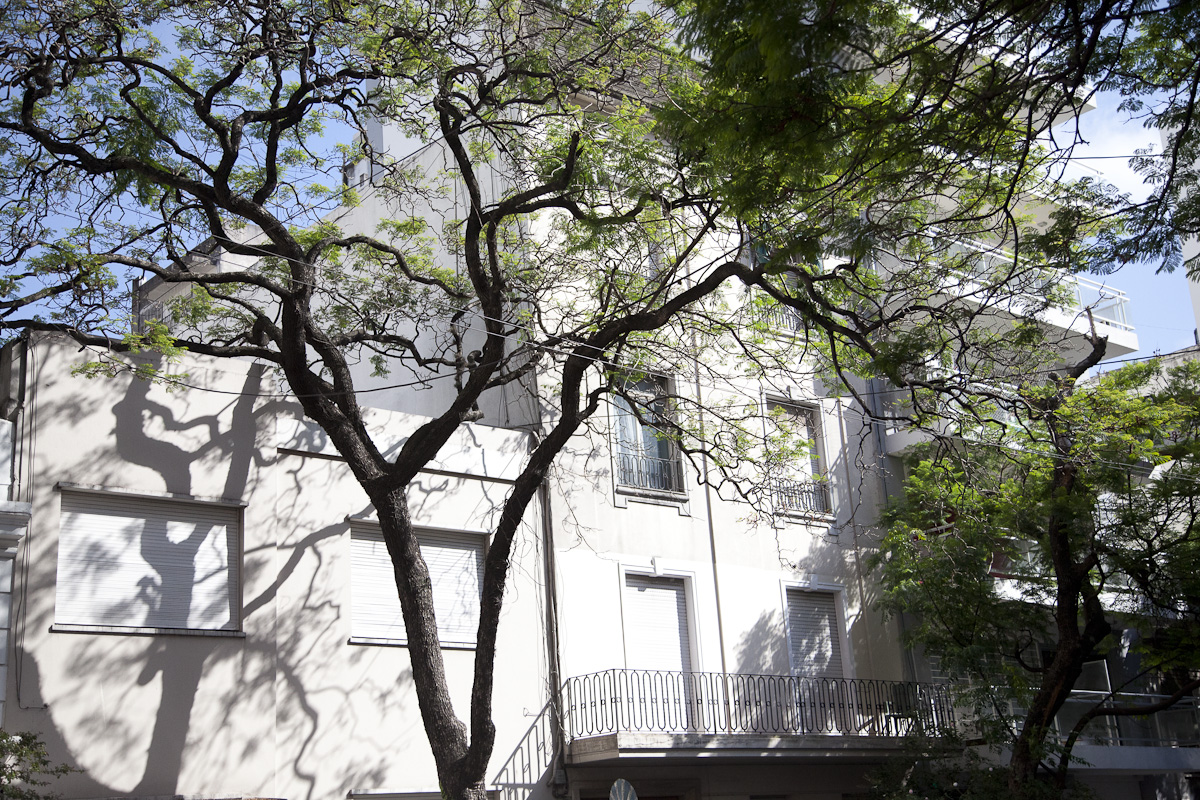
I am not an exception, really. I’m part of a community of global migrants, all my high school friends included, who live in between cultures and are each individually a montage of values, geographies, and cultural identities. I was able to go to La Habana and organize that trip for students exactly because of my experience growing up in Argentina. We are a group of people whose multi-cultural experience gives us the skills to adapt and thrive in other places and cultures.
During this trip I made photographs of the geographical and cultural landscape that I encountered – people, nature, urban life, events, and icons.
It is hard to get past the surface of things, because the camera just seems drawn to represent the active narrative. You have to let the narrative of the event wash past you like a wave reaching the shore and look for the treasure in that brief moment before the next wave rolls in. You have to be of the moment, but not in the moment in order to glimpse and capture another reality.

Being in the role of a photographer helped me to step back and observe the circumstances; editing the images helped me to analyze my experience.
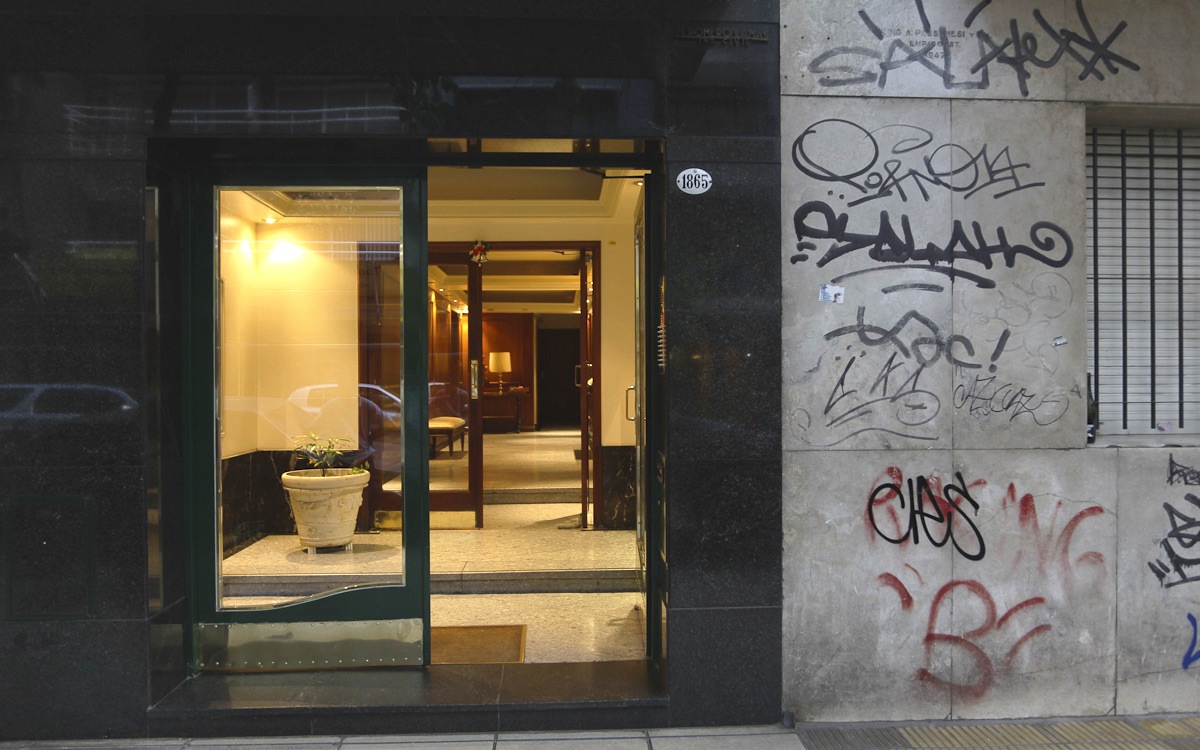
When I took the photograph of the doorway, the doorman asked me why I was photographing it. I told him it was interesting. He shrugged, he didn’t understand, because this was the entryway he secured everyday. He saw the shiny brass and floors he kept polished…and I saw that…and the adjacent wall of graffiti. I must have walked by this place a dozen times, but I didn’t “see” it until the last day.
This image is my analogy for this country: stately, historic, elegant…with the edgy chaos of democracy, the gap between the elite and the poor, the residue of violent military repression, a complicated history….but it also feels like home. This image is also about who I am – occupying the space of two worlds and trying to make sense of their differences and similarities. It was the last photograph I took in Buenos Aires.
Buenos Aires, Argentina, 2011-
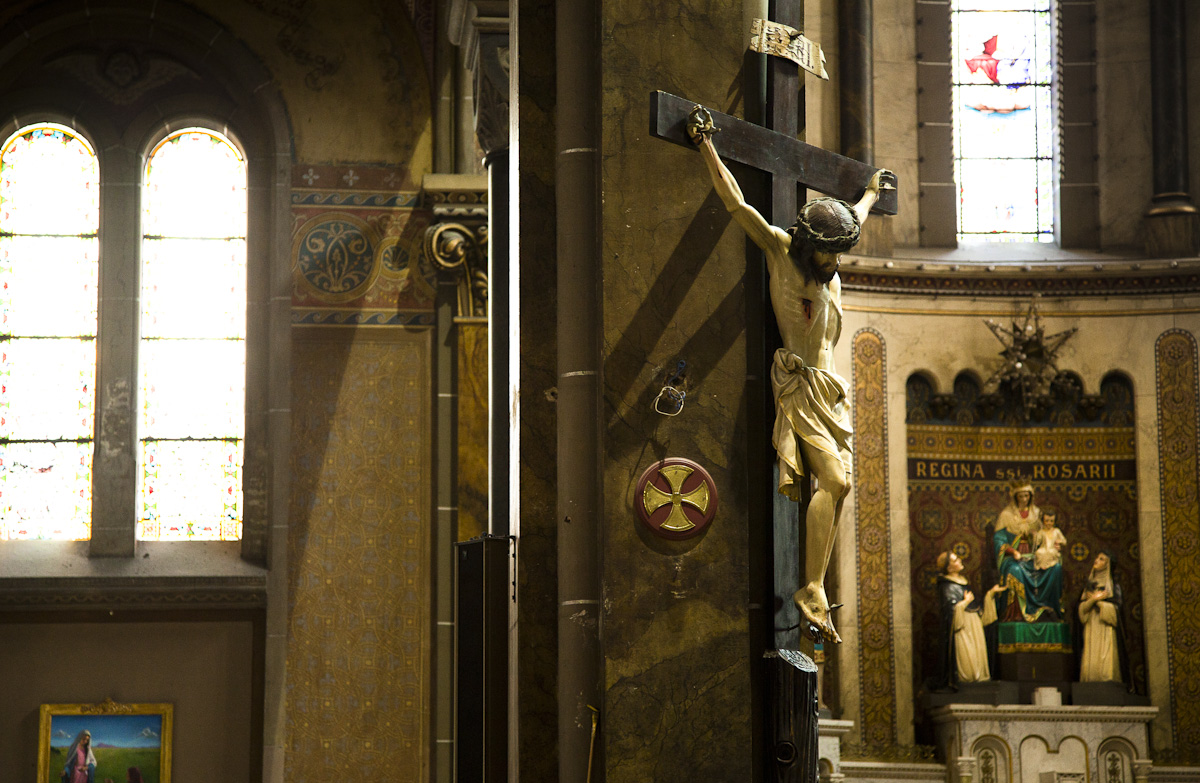
La Iglesia del Espiritu Santo, Palermo, Buenos Aires
It is hard to travel anywhere in Argentina without encountering evidence of a culture with an “eternal fascination with the deceased” that extends far beyond the walls of the famed Recoleta cemetery into the most remote rural village. (Ortiz, 2011) The cadavers and places of death of those who earned fame, held positions of power, or died under tragic and mysterious circumstances take on a sacred presence commemorated with rituals, processions, offerings and altars at roadside stands and cemeteries across the country.

Two tombs at Recoleta Cemetery, Buenos Aires
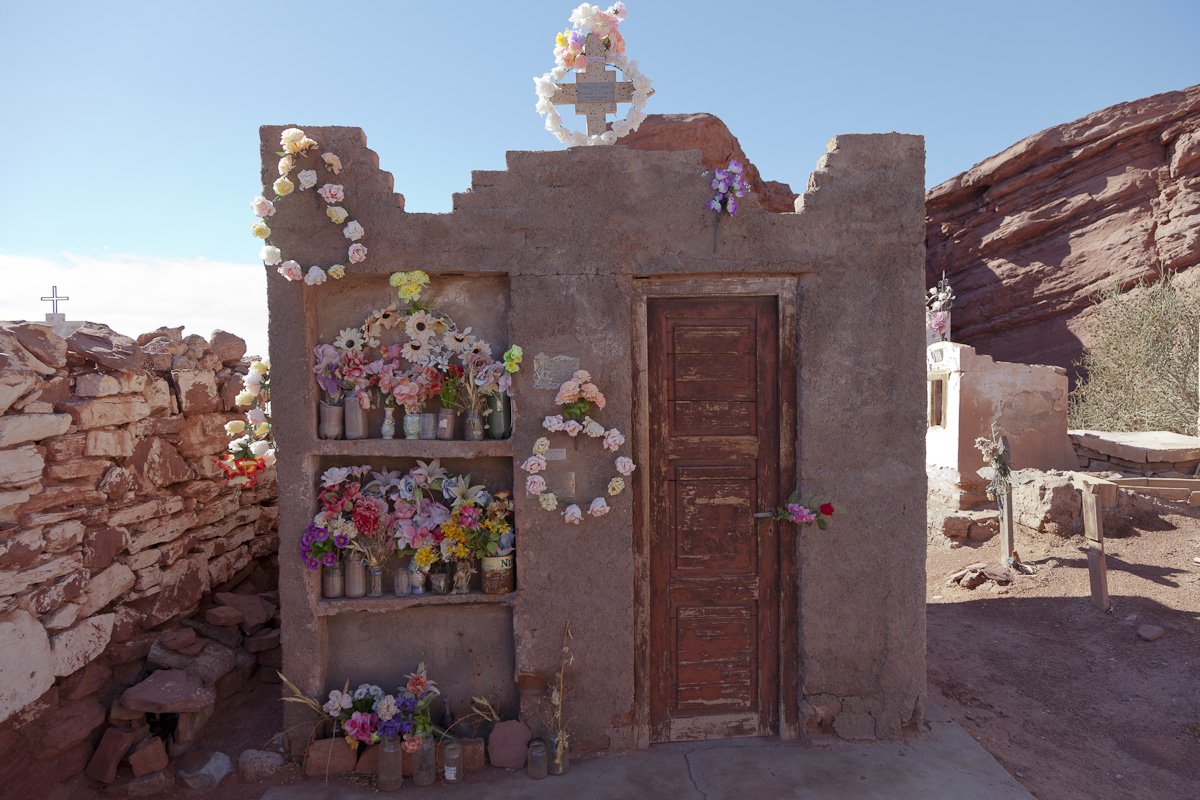
Mausoleum in Villa Union, La Rioja
The Recoleta cemetery, with tree-lined avenues of mausoleums representing the past and current elite of Argentine high society, is visited by thousands of tourists each day. Evita Peron, whose fame superseded her low class, was finally buried here 16 years after her corpse was “disappeared” by the military junta in order to discourage public adoration at her tomb.
The importance of human remains “arises from the belief in the influence of the dead on the world of the living”, a belief that was exploited by the military during their seven-year repressive rule in which they “disappeared” 10 – 30,000 Argentines. The generals extended state terror into the hereafter and eliminated the possibility of mourning and political protest strengthened by the bodies (and evidence) of their victims. (Robben, 2004) The consequence is that to this day there are thousands of families who do not know the final destination of their loved ones.
Sites of death and tombs are places of miraculous power in Argentina, as are natural phenomenon with figurative appearance.
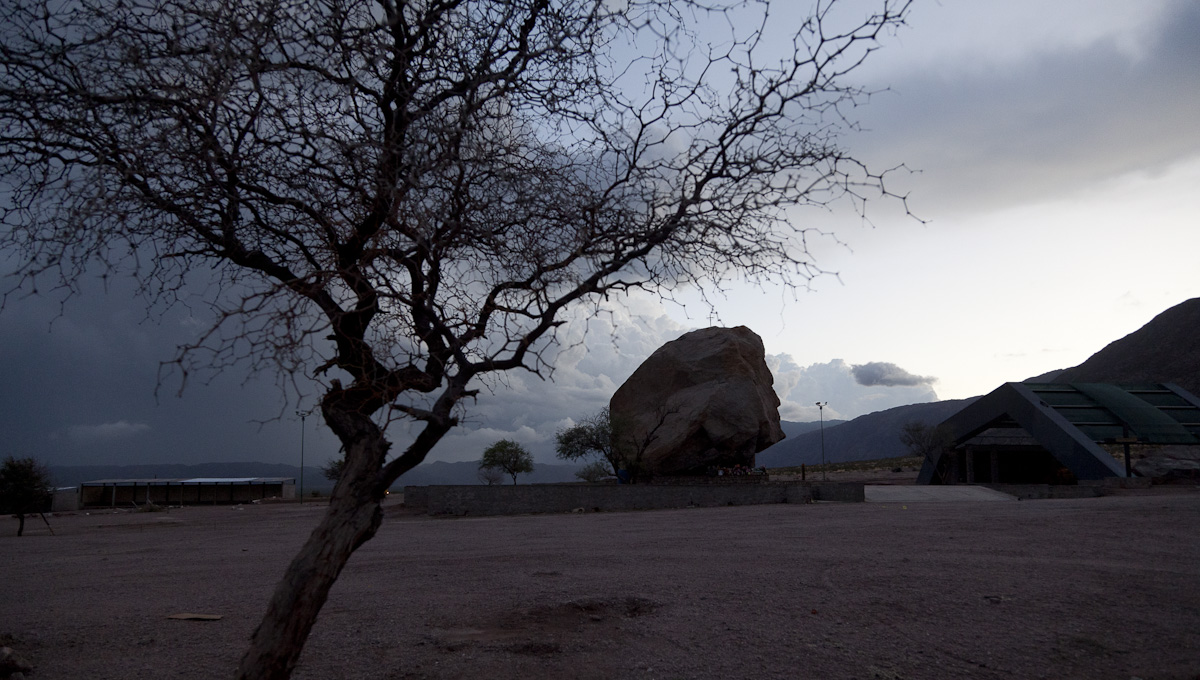
Señor de la Peña, La Rioja
Señor de la Peña is a very large boulder that appears to have a human profile naturally appearing on the right edge. It’s base, once charred black by the constant burning of candles and completely surrounded by amulets and other offerings, is now a provincial park surrounded by a large parking lot. Despite the park prohibition, offerings are left each day.

Villa Union in La Rioja contains the site of an angelito at the town’s cemetery.
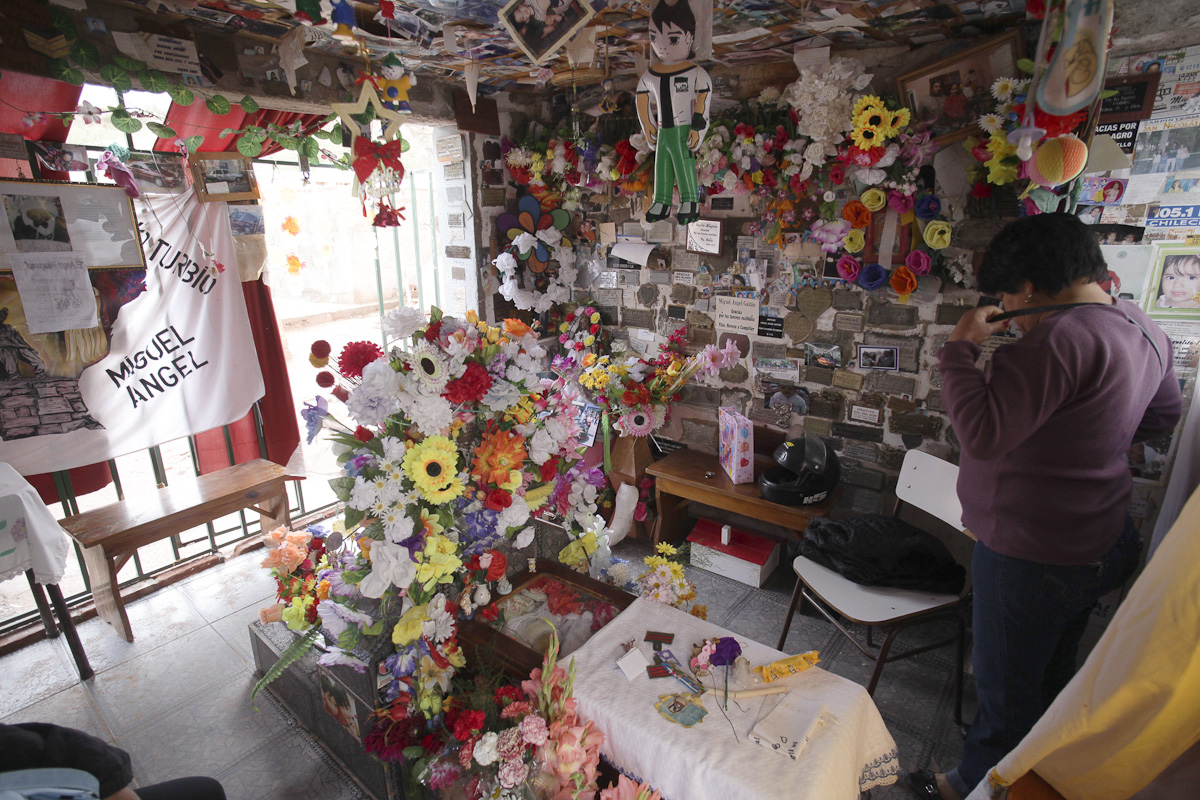
El angelito de Villa Union
The child died just under year old in 1986, but his coffin was discovered mysteriously unearthed each morning for six days. On the seventh day the ataud was opened and it appeared that the baby had become mummified. A special mausoleum was built and the coffin, now with a built in window, is placed in the center. The room, which is open to visitors, is completely covered on the inside by offerings of gratitude for the angelito’s intercessions for healing and acquisition of trophies, homes, and cars. The angelito is a young and growing legend and has yet to gain the national following of La Difunta Correa.
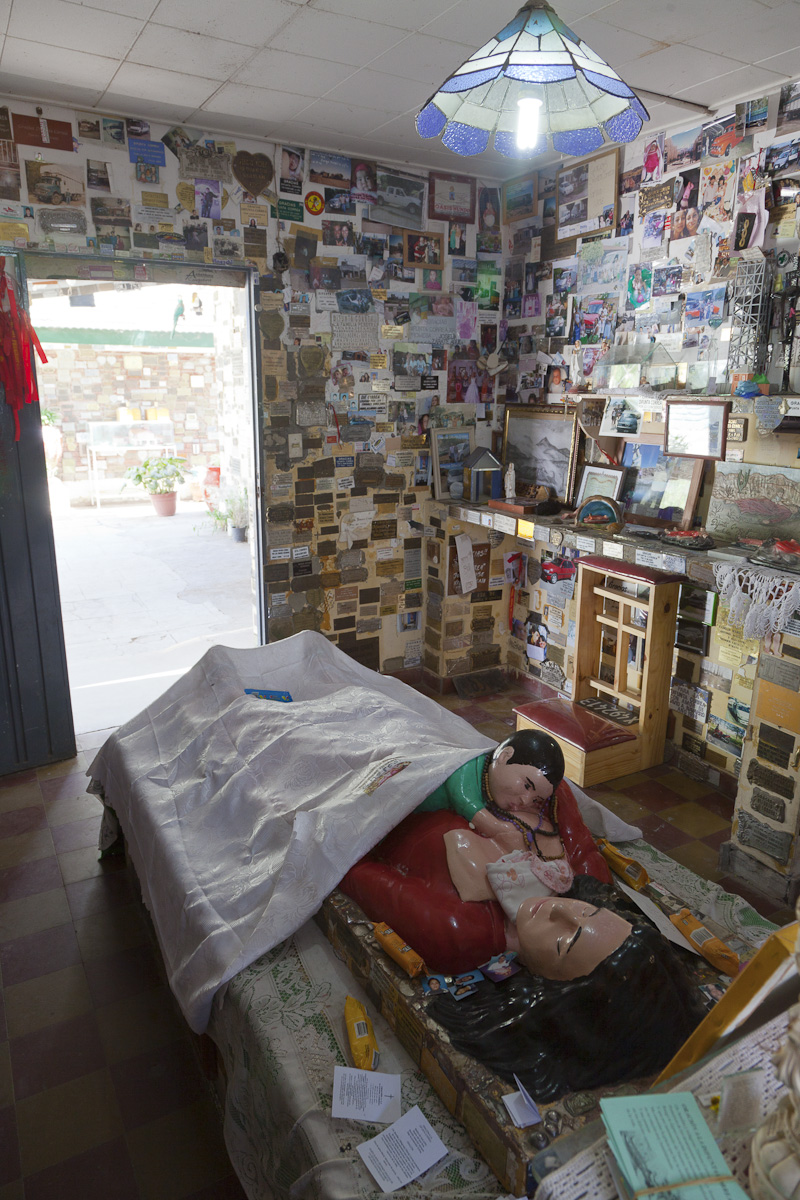
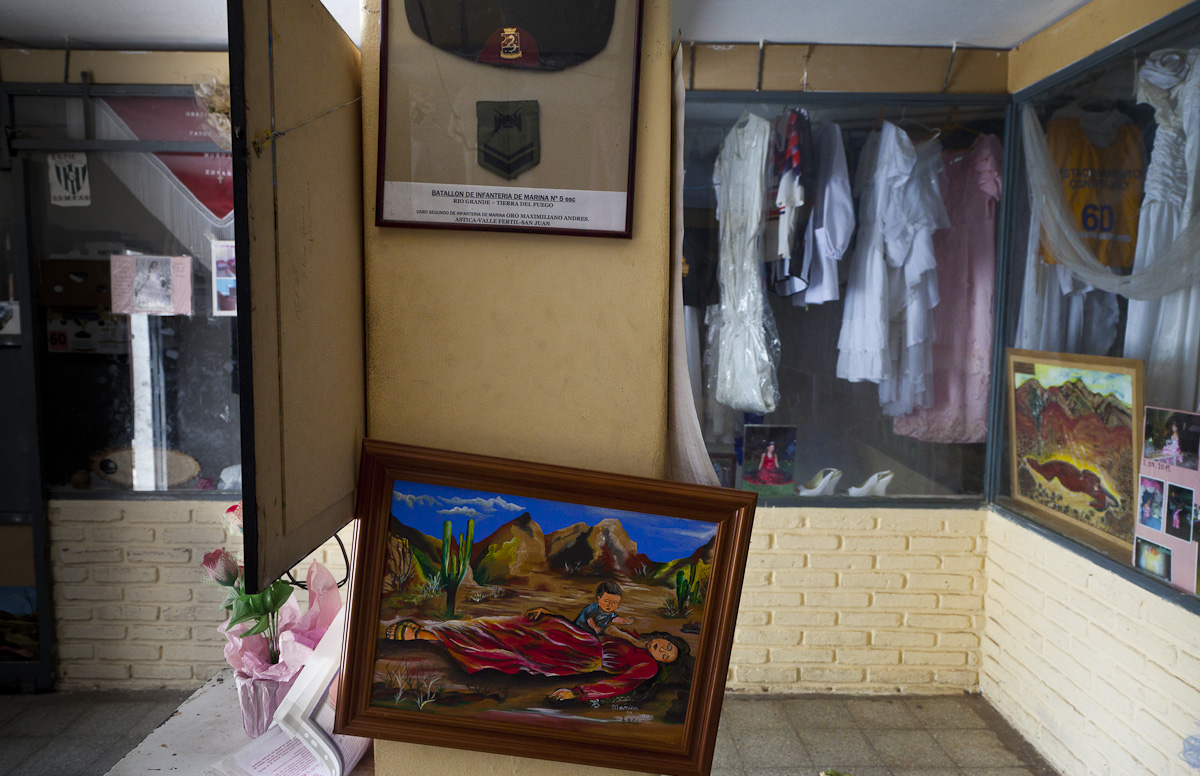
La Difunta Correa (see previous explanation) is honored at thousands of roadside stands, but primarily at the site of her death in San Juan where people leave tokens of their gratitude, including models of homes, plaques, wedding dresses, license plates, trophies, diplomas, military uniforms….the list is really never ending.

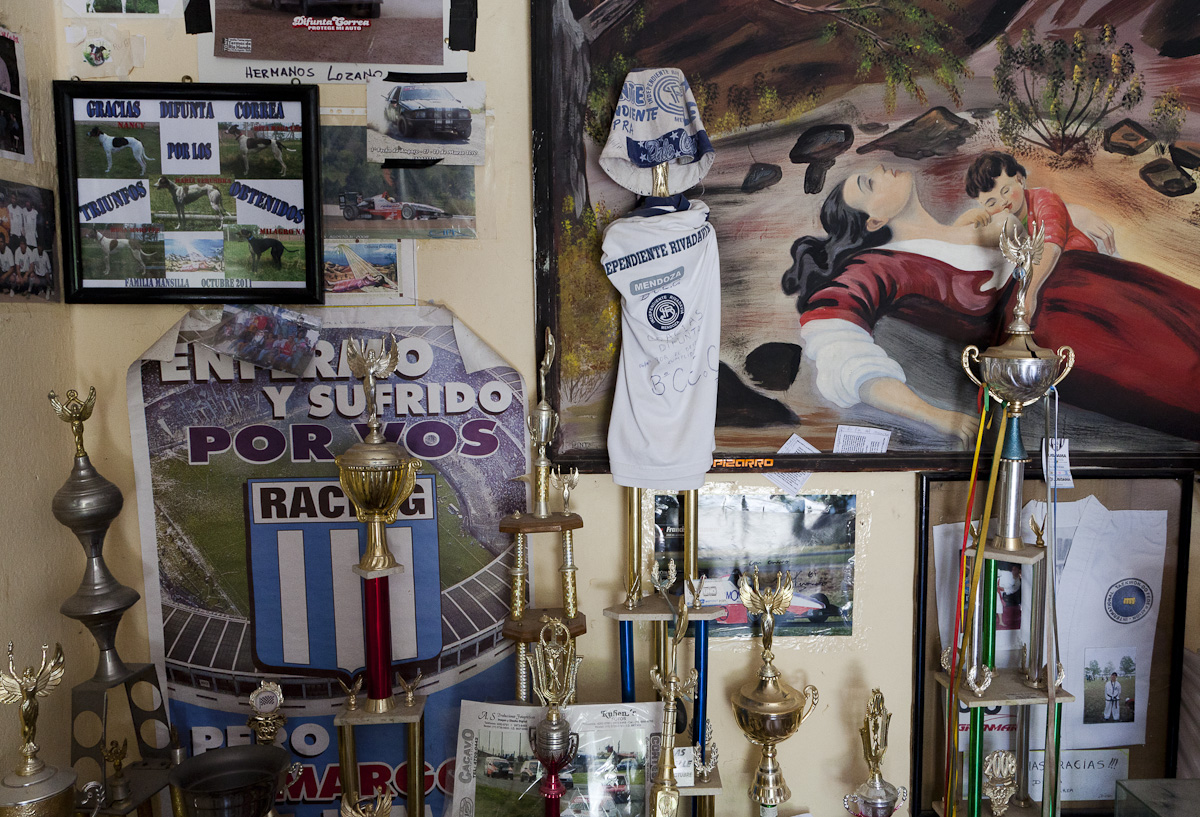
Soccer trophies at La Difunta Correa
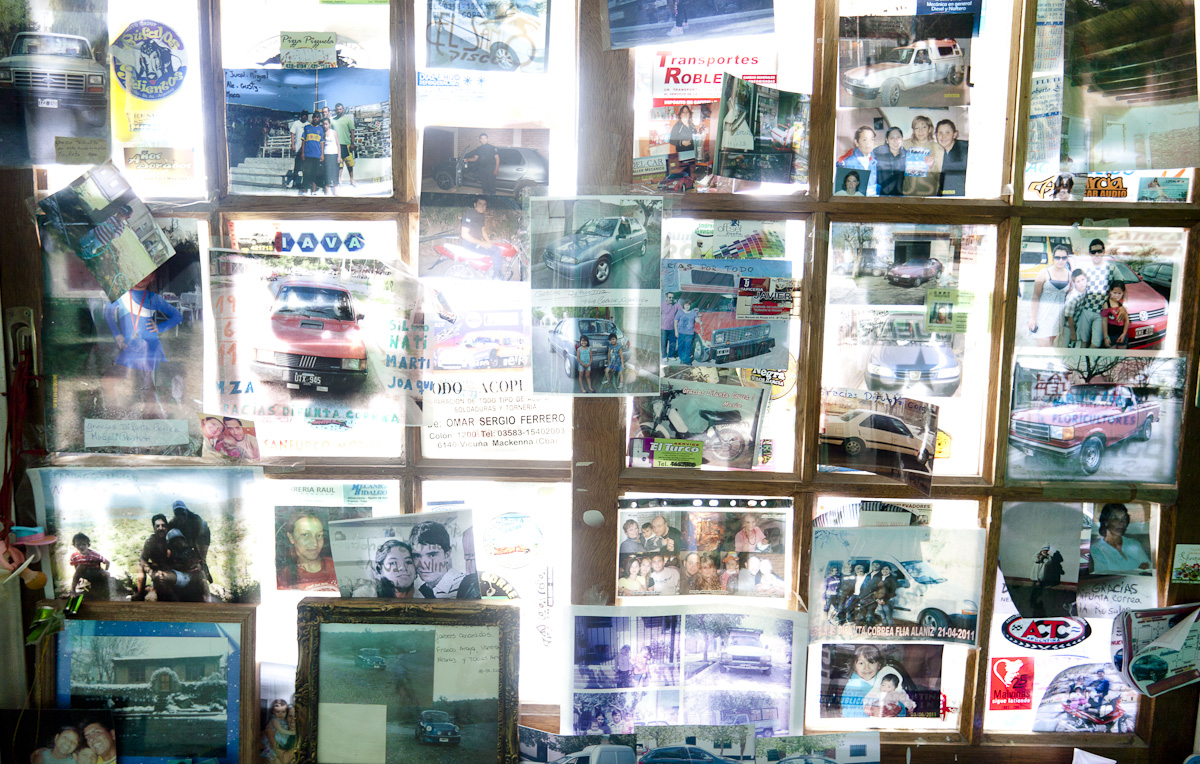
Among the objects are many photographs, snapshots that represent an item that La Difunta Correa has provided from someone. The photographs register the completion of a promised visit to honor her place of death. There are many photographs of children left for La Difunta’s blessing.

The combination of mass production and a consumer society with mass adoration is overwhelming. The passionate obsession of followers occupies every visible surface. The multiple sidewalks to the top of the hill to her temple are lined with thousands of offerings and the roof and pillars of the walkways are completely covered with flowers, license plates and plaques.


The wax that drips down from the smoke-blackened rock at the top of the hill is channeled into a special pool at the bottom. The surrounding area has thematic rooms for the offerings, including rooms dedicated to brides, athletes, truck drivers, construction workers, the military, among others. Plaques of gratitude are embedded into the concrete plaster of each building.

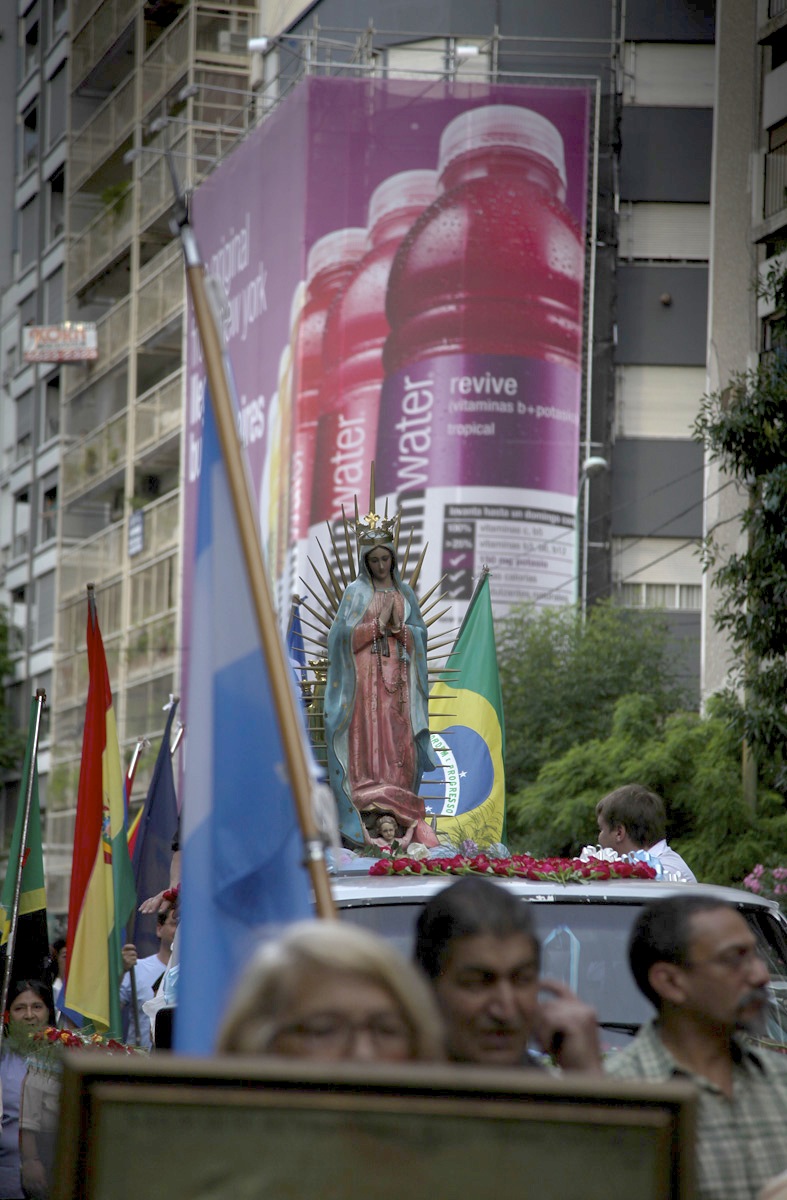
The Virgen de Guadalupe, who is considered saint by the Catholic church and resides there, is a frequent participant in religious processions…..

Virgen de Guadalupe, Palermo, Buenos Aires

Religious procession, Palermo, Buenos Aires
Unlike the Virgen de Guadalupe, La Difunta Correa, is a folk saint whose manner of death captured the imagination and hopeful desires of the Argentine public who make regular family pilgrimages to honor her.

The tombs are an image and are filled with images. The icons that surround the site of the body’s burial represent the miraculous power that has been attributed to that individual. The photographs plastered over every available space…and several layers deep, represent the hopes of followers. But I think many people visit to witness the obsessions of others.
References
Ortiz, I. (2011). Death and Memory in Buenos Aires [Electronic Version]. The Yale Globalist, from http://tyglobalist.org/blogs/death-and-memory-in-buenos-aires/
Robben, A. (2004). State Terror in the Netherworld: Disappearance and Reburial in Argentina. In A. Robben (Ed.), Death, Mourning, and Reburial: a cross-cultural reader. Cornwall: Blackwell Publishing.
Palermo, Buenos Aires –
Café con leche, cafecito, jarrita de café….next to máte, taking time to savor an expresso or coffee with milk is a frequent Argentine pastime.

First Cup
For fun I photographed each of my coffee breaks with my Iphone. A few did get away from me….

Second Cup
Having a cafecito is a visual and auditory experience. The white linen tablecloth, the murmur of the other conversations, the slight foam that crests the cup, tearing open the sugar packets (what happened to the cubes by the way?)…. the bittersweet taste of my last cafecito in Palermo.
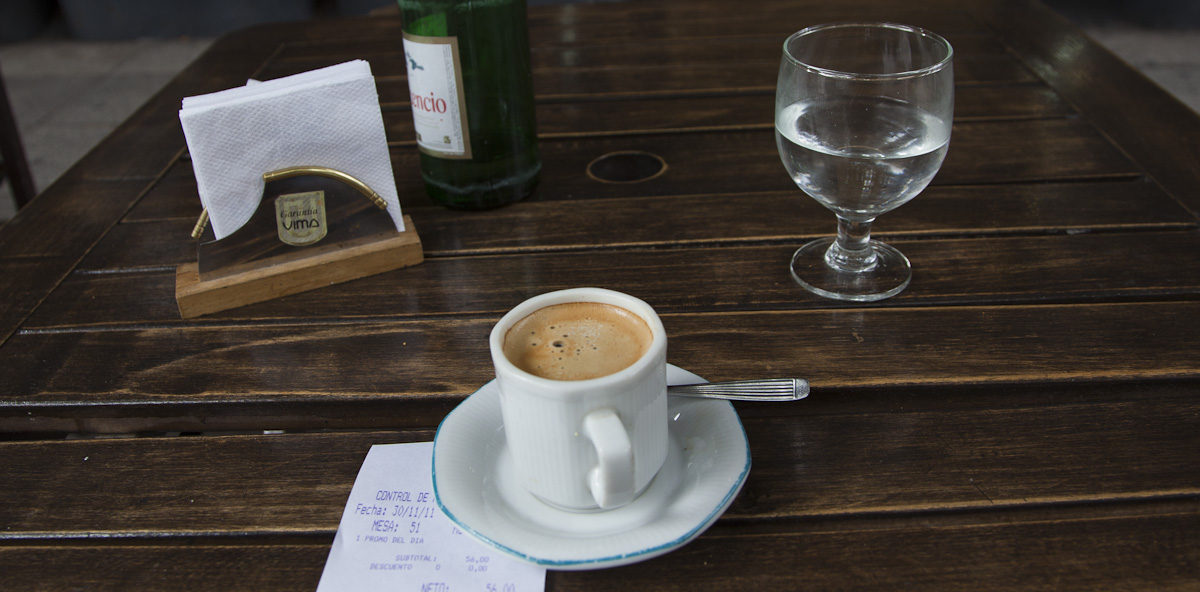
Third Cup
Sitting at a sidewalk café is about a different pace of life. It is a lifestyle where you are out of the isolation of the suburbs and into the life of the street – having a conversation, watching people stroll by…having someone serve you the coffee.

Fourth Cup
We’re all business all the time in the U.S. and everything has to be so organized…we’ve got to have a franchise that brands the sidewalk café as their own.

Fifth Cup
Well, coffee in a little white cup perched on a small wooden table on a Buenos Aires sidewalk wins the competition hands down.
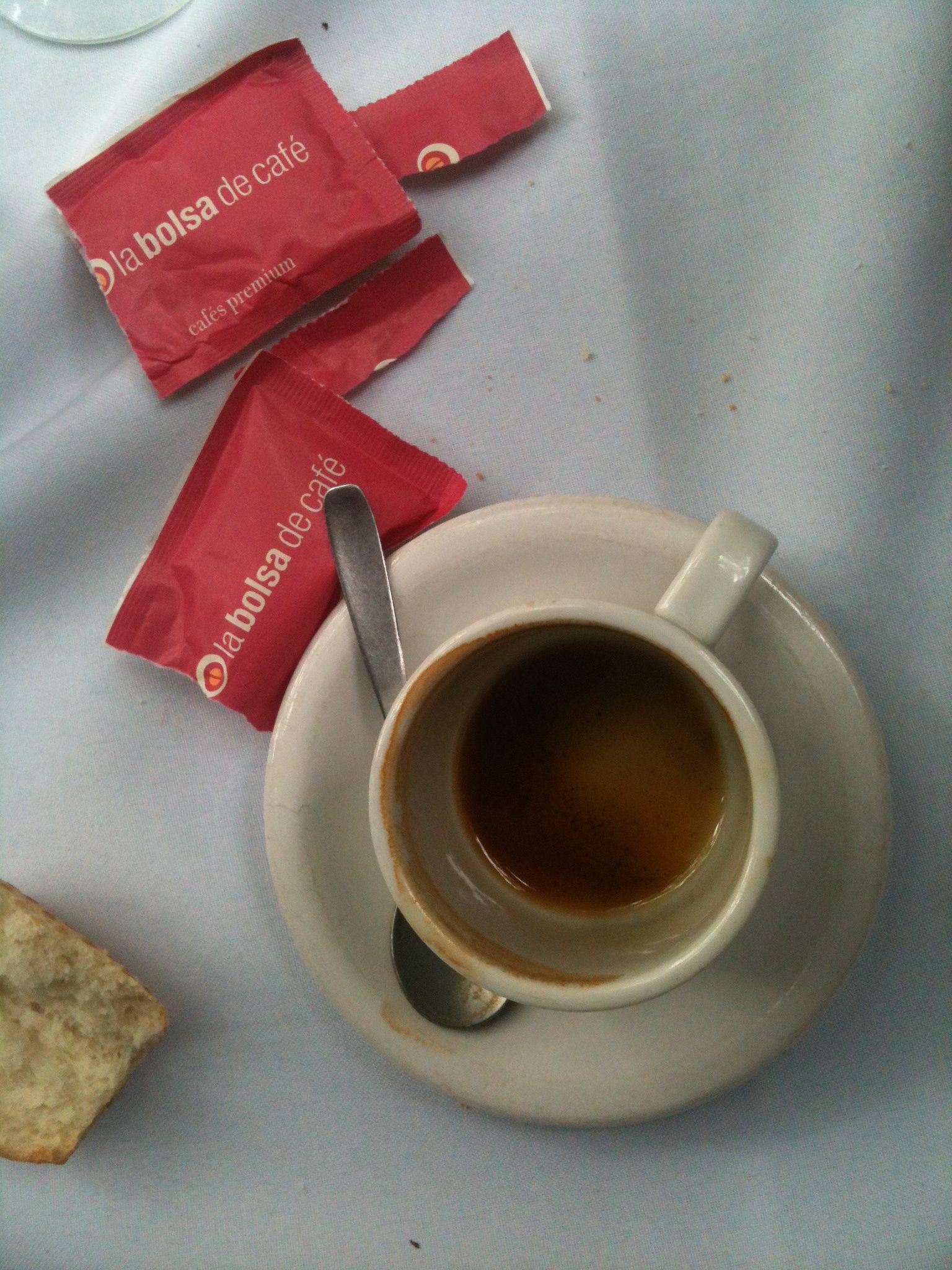
Last Cup
So, my last coffee is a tribute to slowing down and living in the moment.
Casa Rosada, Plaza de Mayo, Buenos Aires –
This type of event would have been unheard of 30 years ago in front of La Casa Rosada or anywhere else….


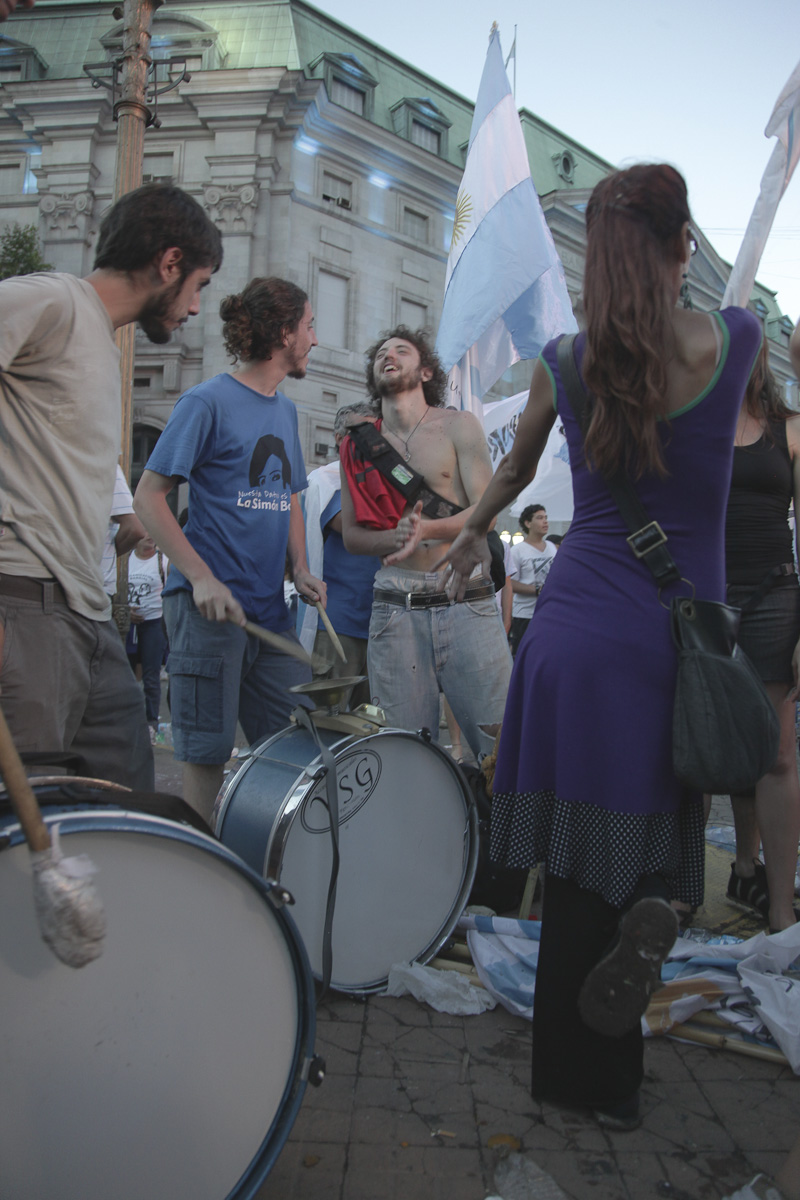

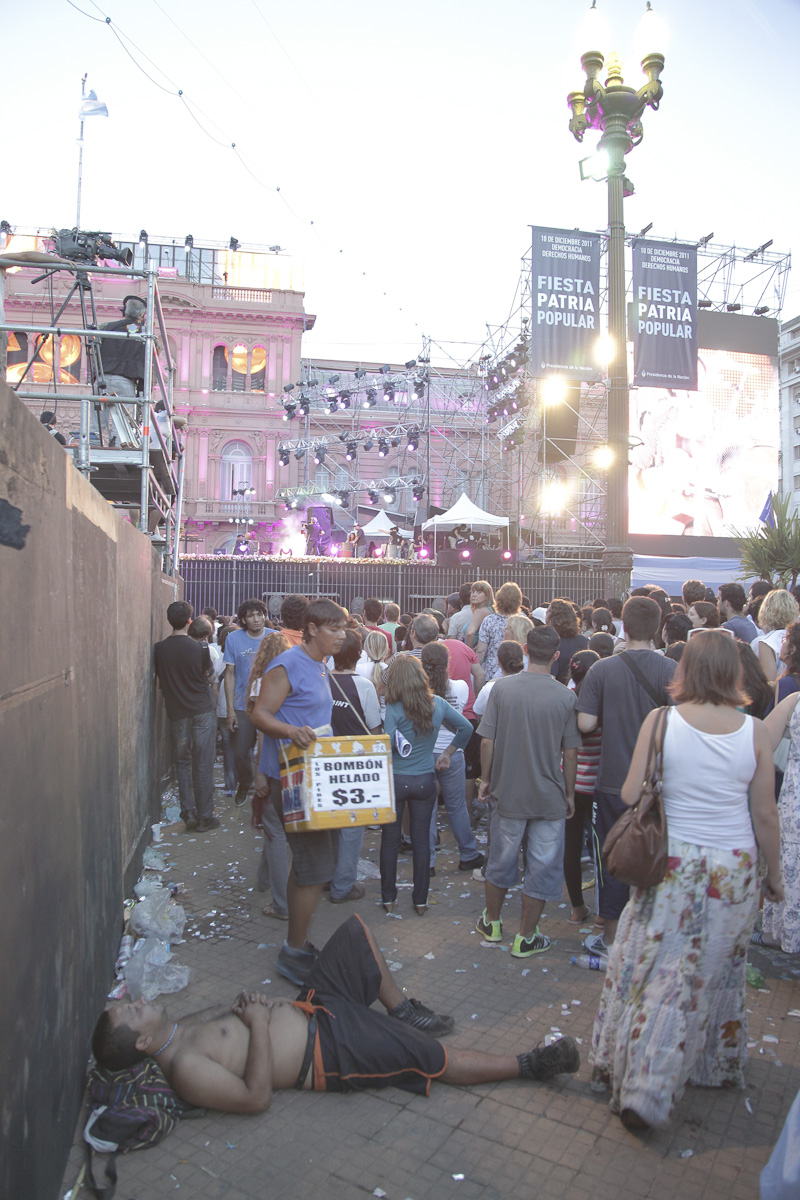

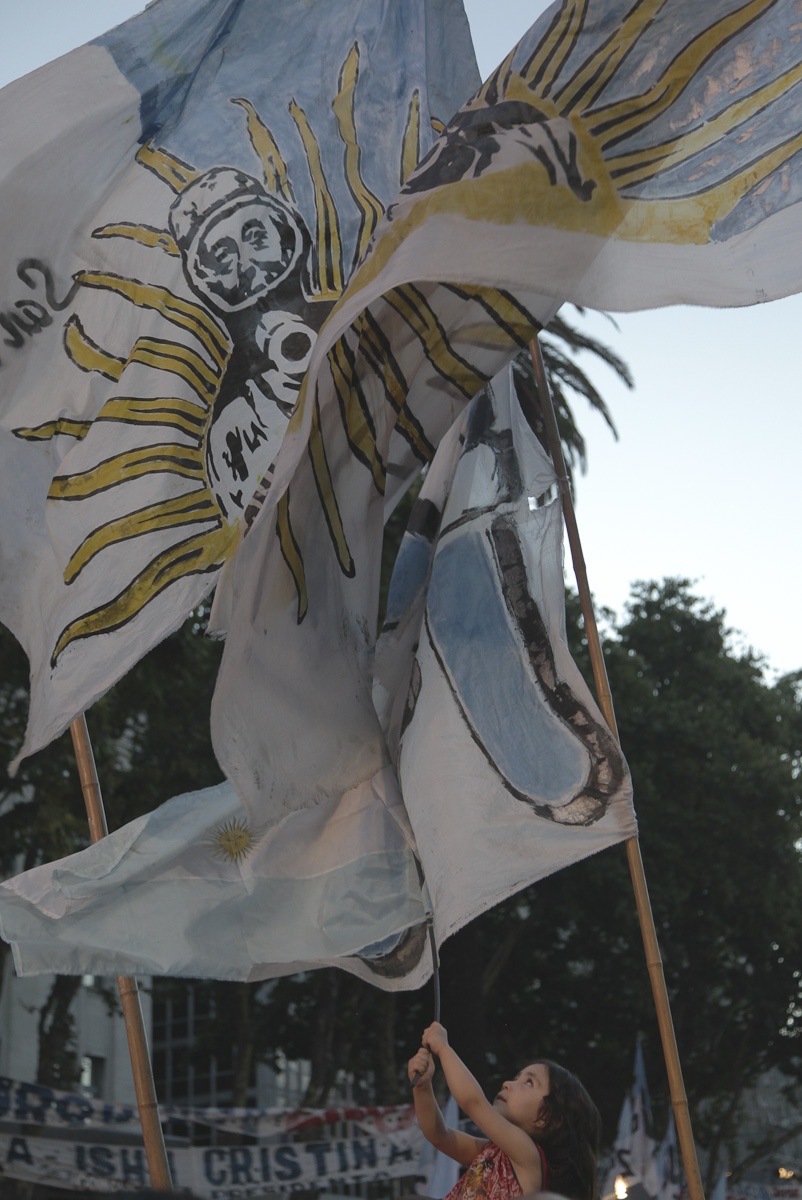
The day before I left Argentina 33 years ago was when the national team beat Peru 7 – 0 to qualify for the final of the World Cup. I was in the street with hundreds of thousands of people in downtown Buenos Aires celebrating in front of armed military patrols who quietly stood by. Now, the day before my trip ends, it is such a pleasing coincidence to be here at Plaza de Mayo observing the celebrations of a persistent and stable democracy.
Villa Union to Chilecito, La Rioja –
Cuesta de Miranda has been a communication and travel route since pre-hispanic times. The mountain overpass has seen several battles including the famous Batalla de Cuesta de Miranda between the federales and the montoneros (they won) in 1867.
The 114, 80-curve gravel road was built in 1920 by Italian engineer Vicente Balloli and connects Villa Union and Chilecito. It is slow going around the treacherous precipice dropoffs, but the views are spectacular. I have now added my photographs to the large collection already floating around the Internet of this historic quebrada.
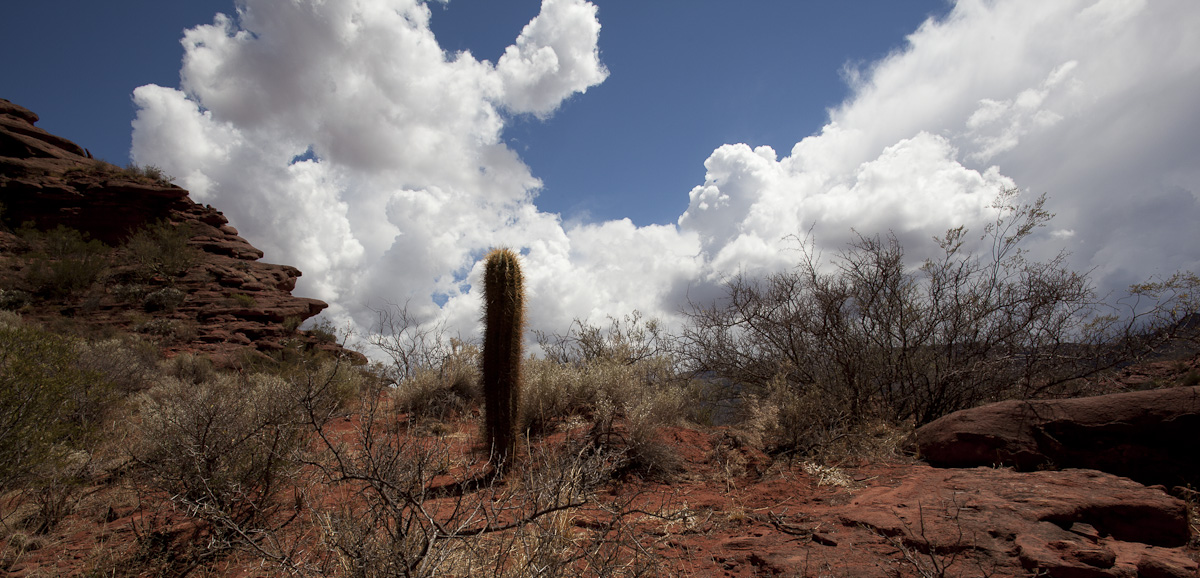
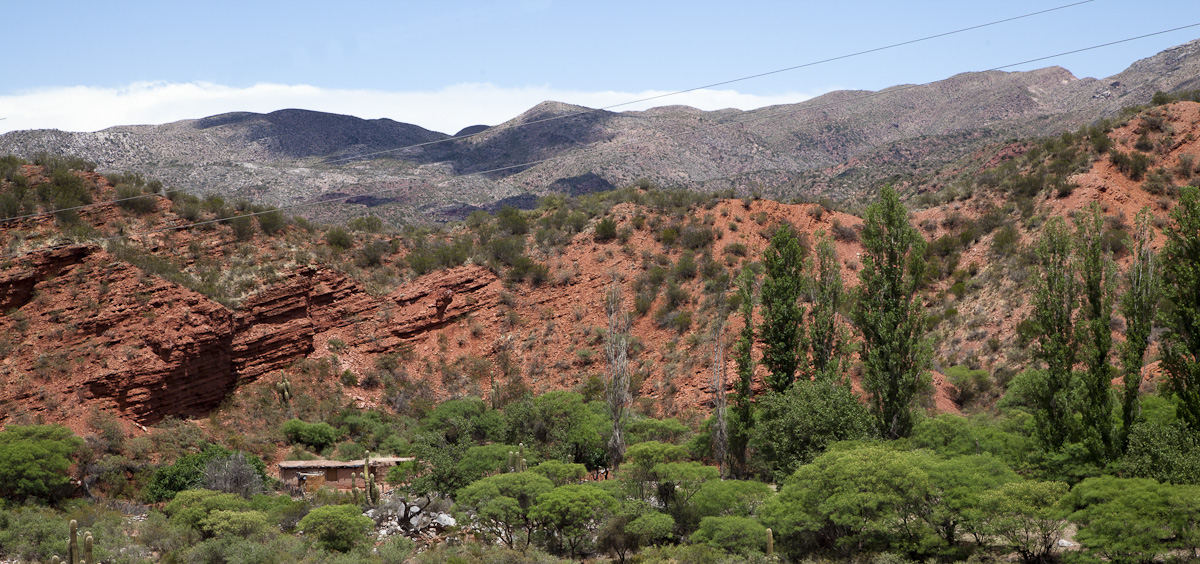
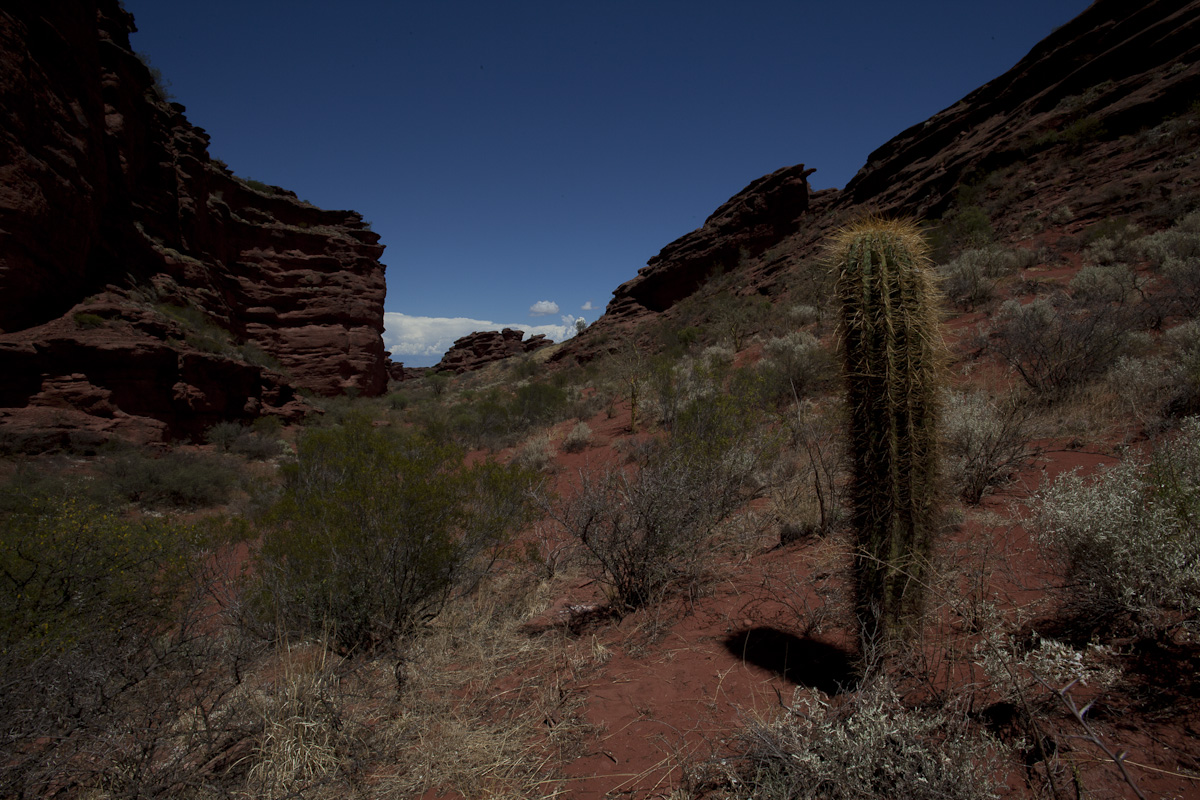
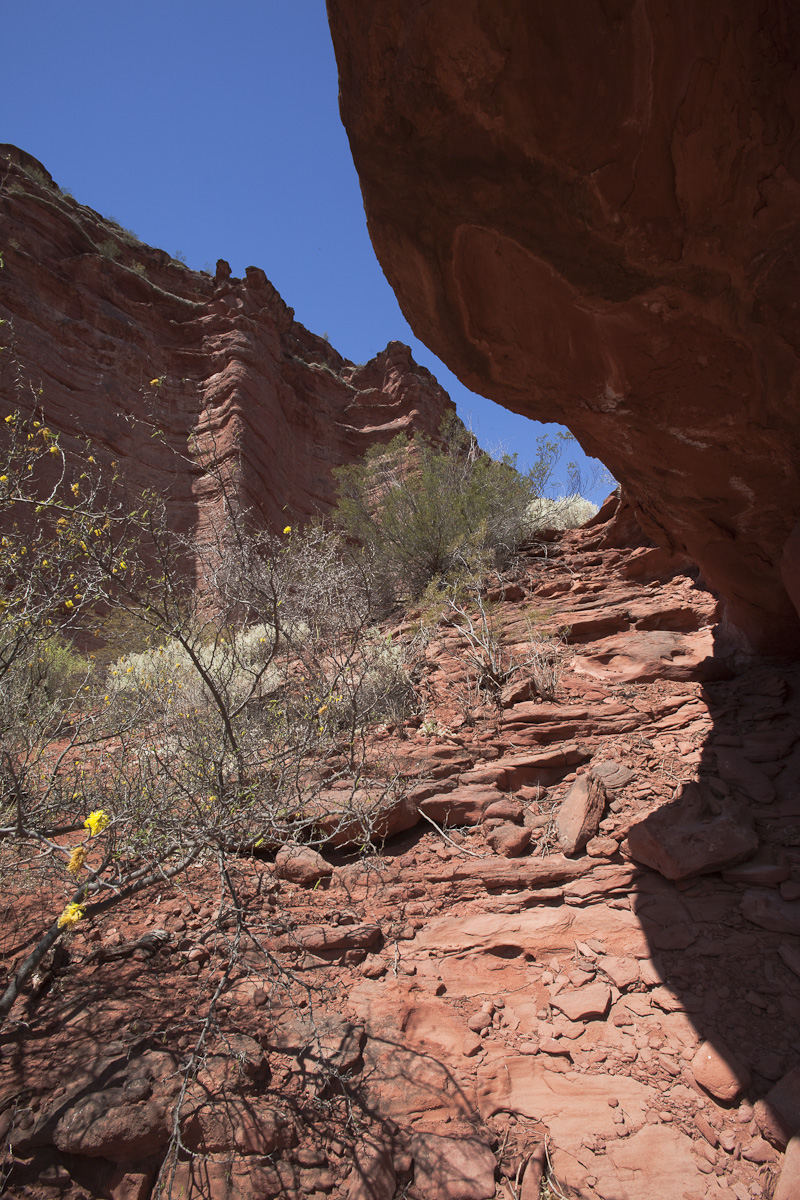
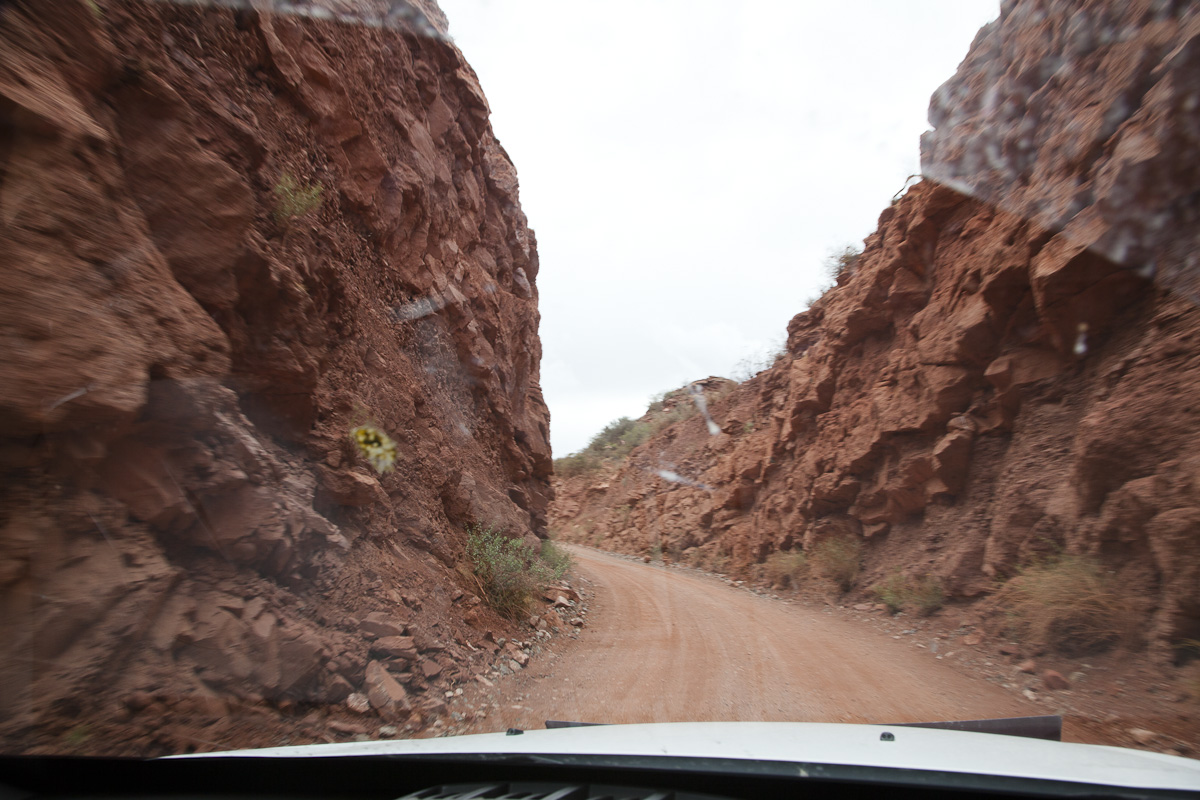
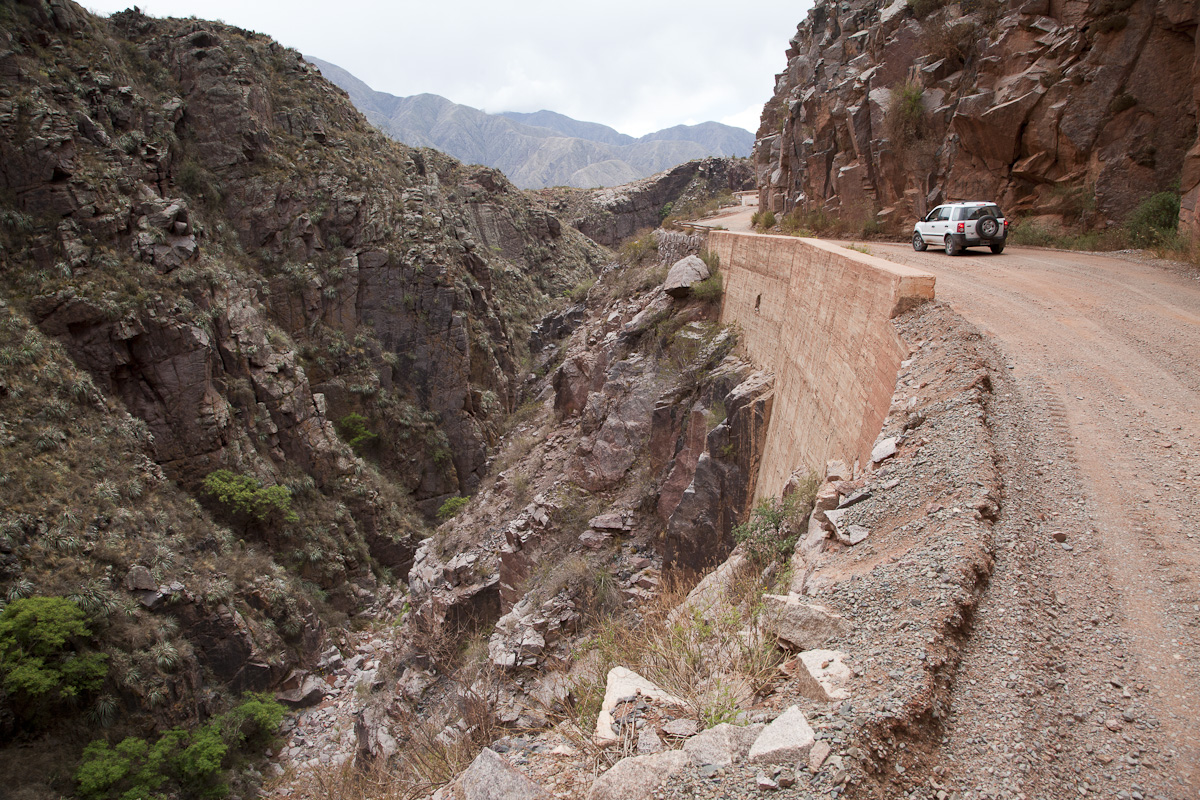
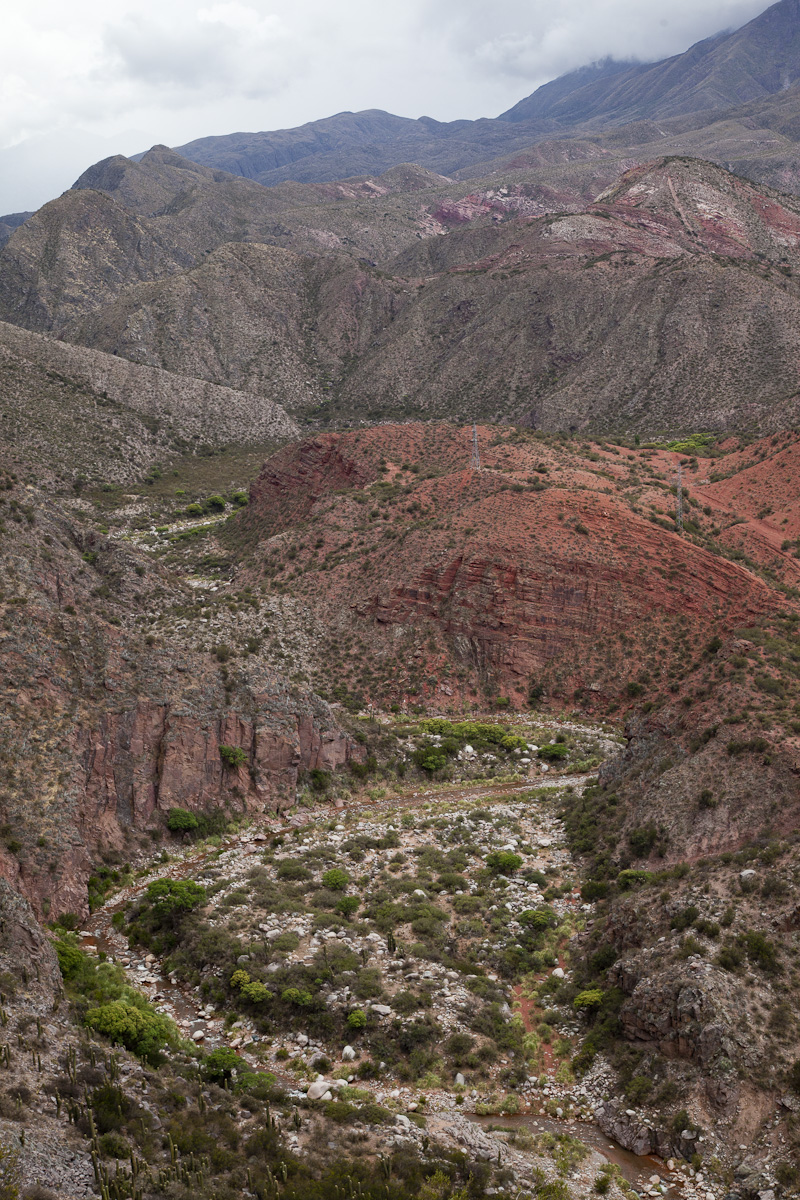
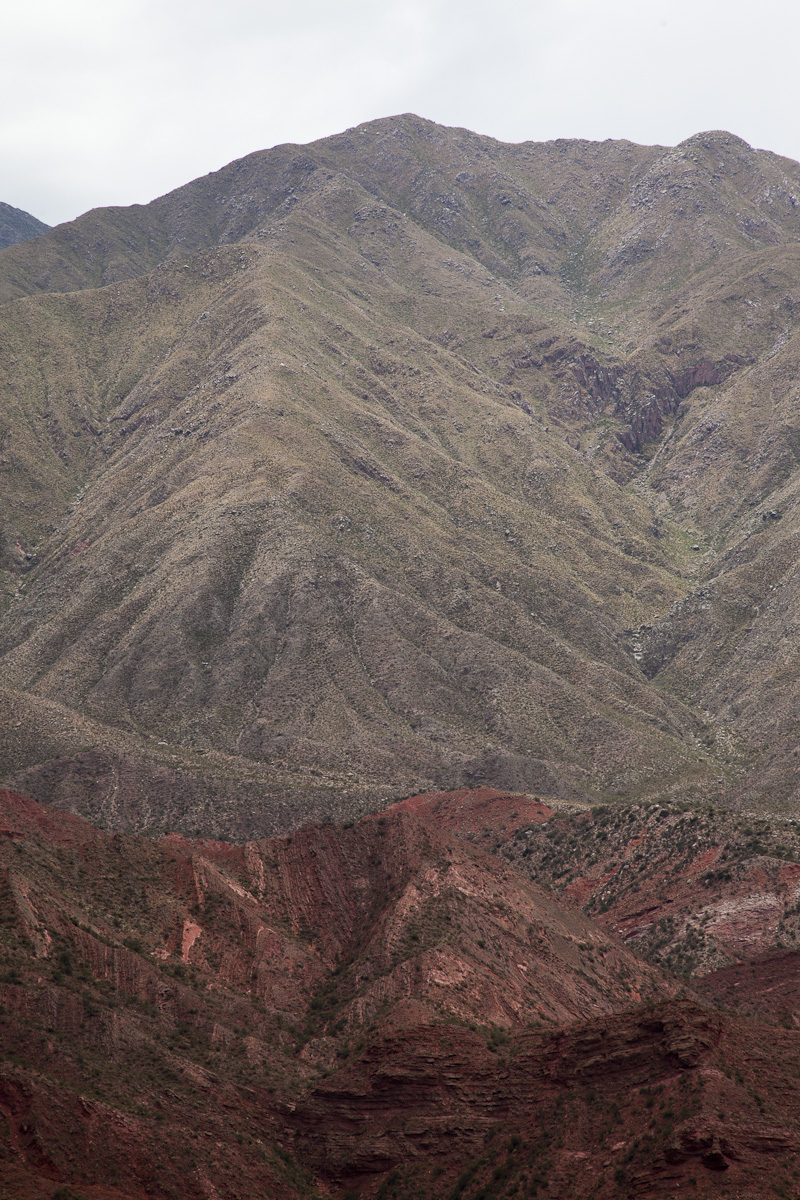
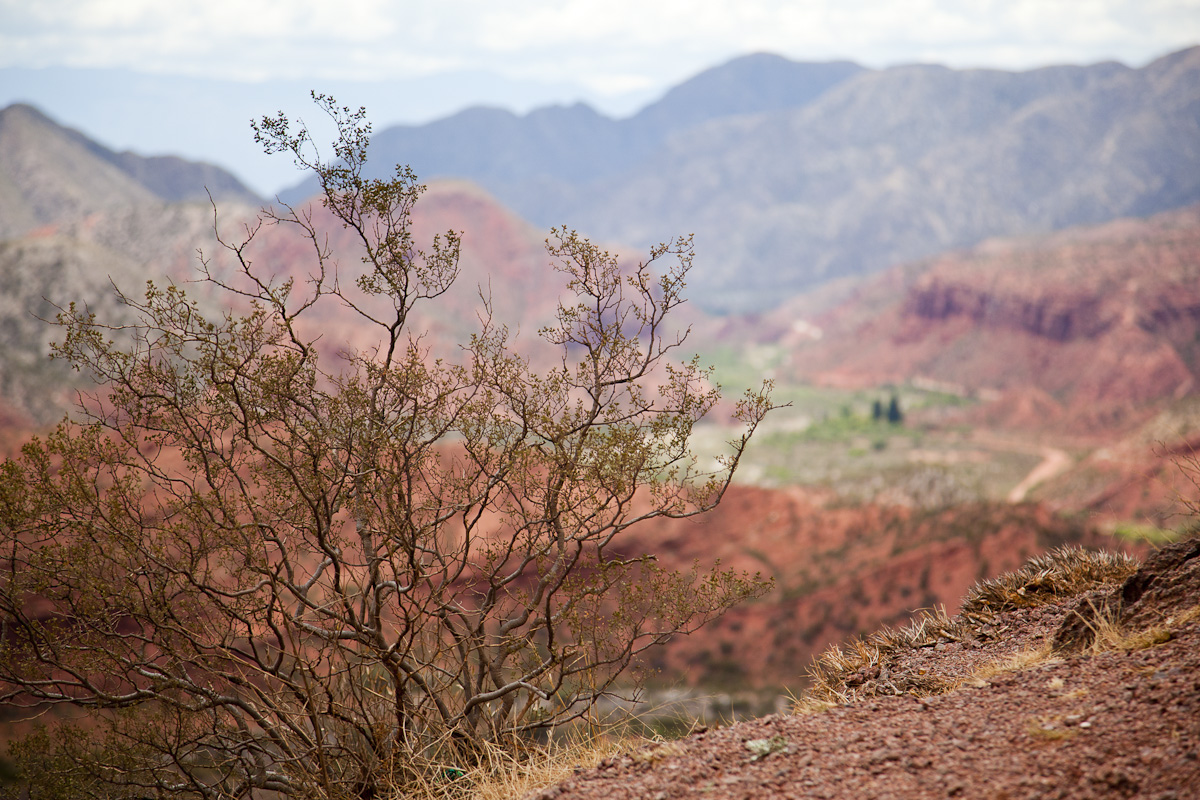
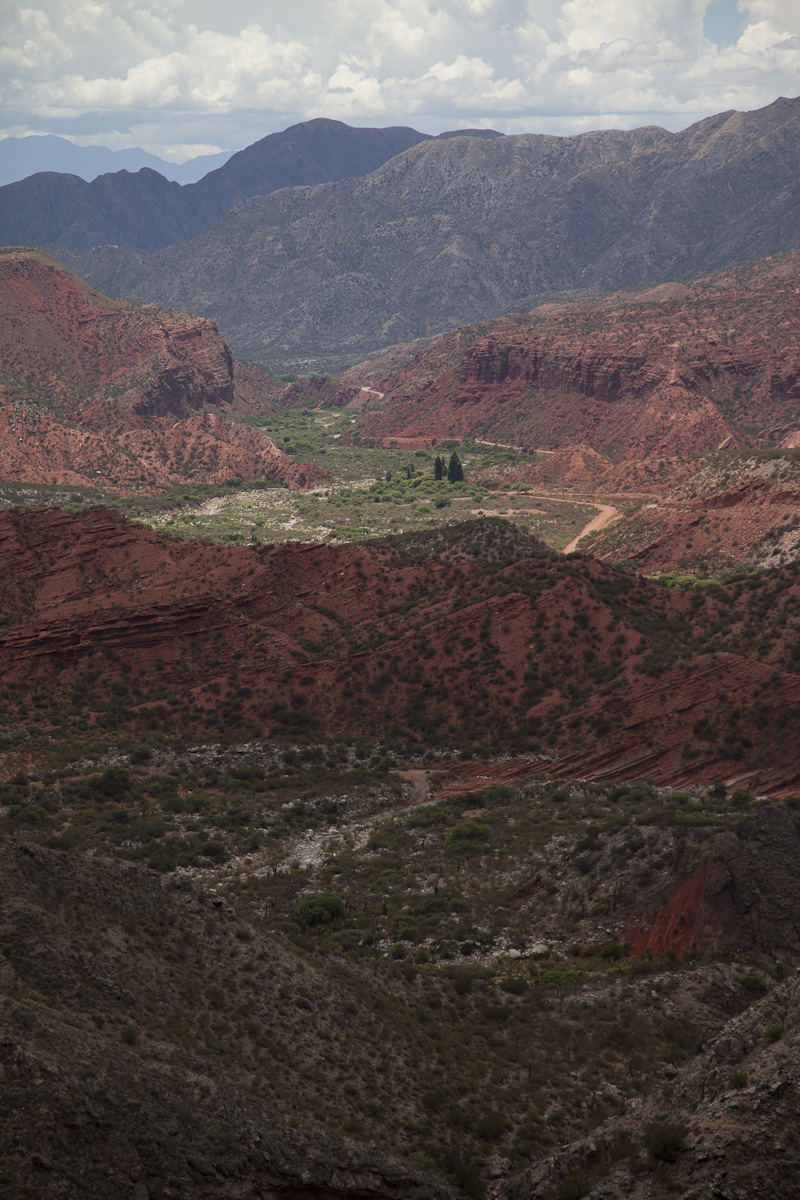
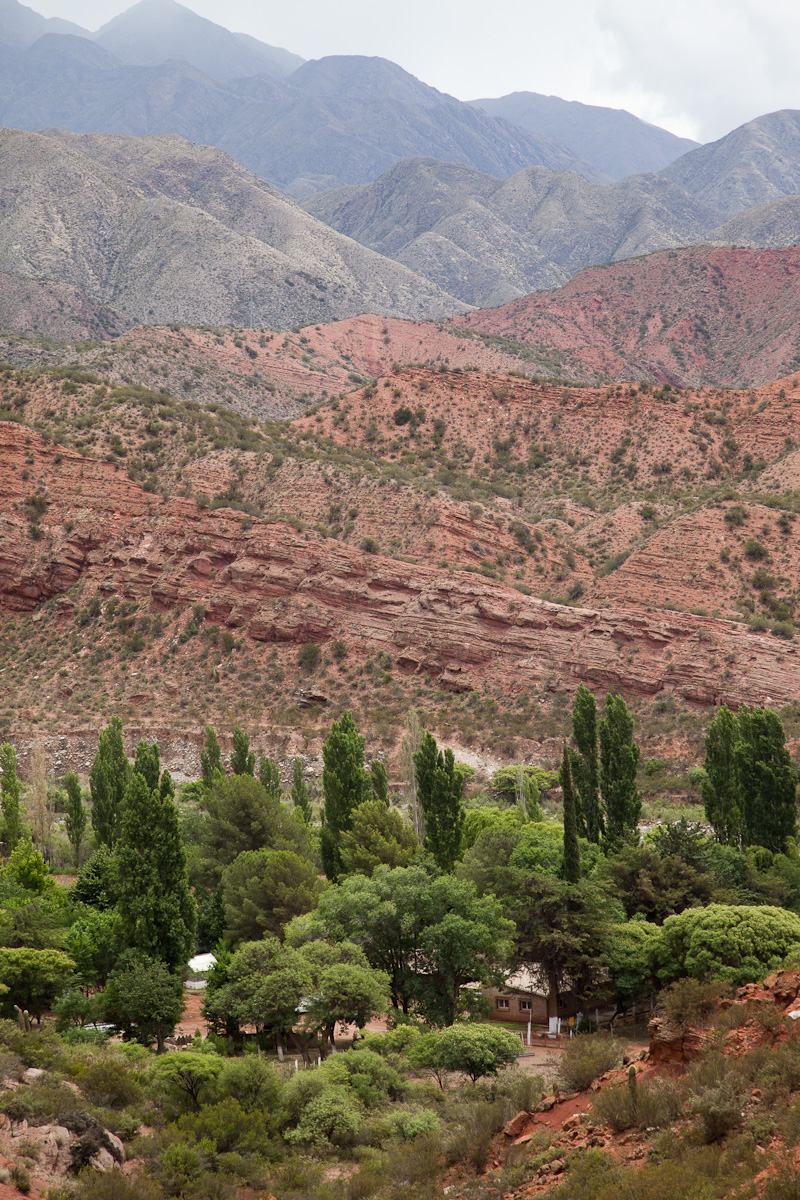
When you photograph a grandiose landscape like this with deep space and panoramic views it gives you a lot of respect for the photographers that are able to translate this landscape into the two-dimensional space of a photograph and still convey the drama of the space.
Bodega Norton Malbec, Mendoza –


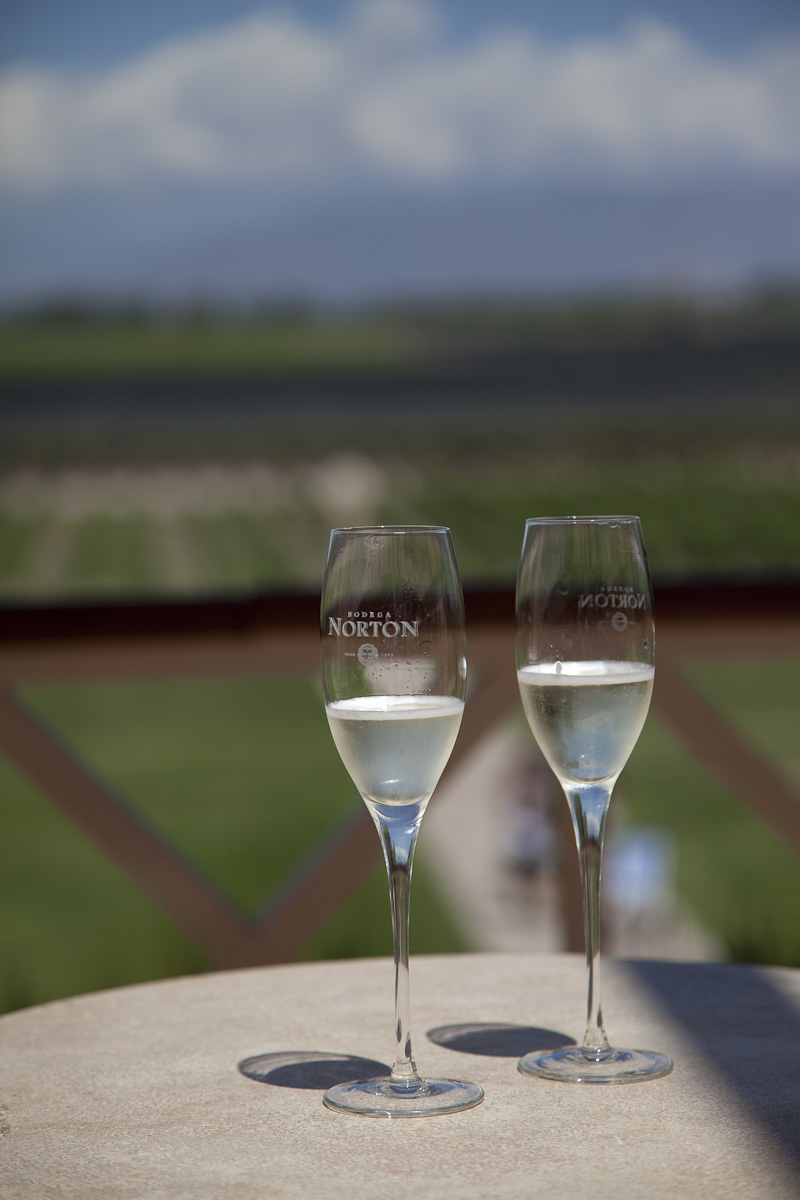


Villa Union, La Rioja – Road trip with Daniel and Virginia in northwest Argentina
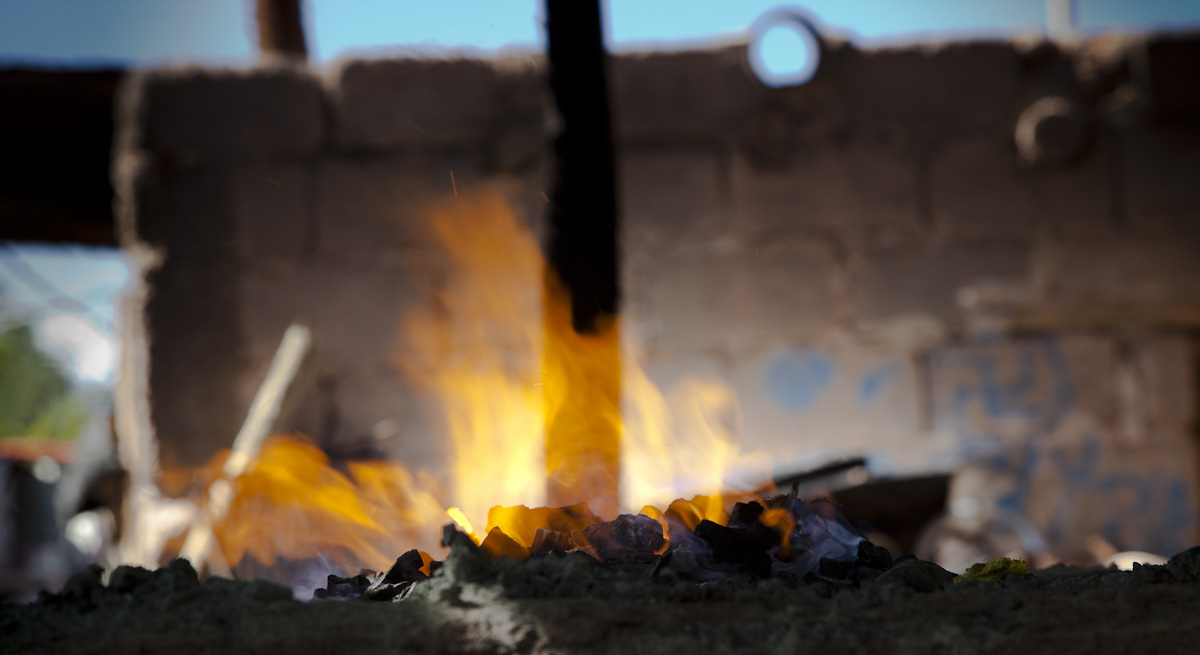
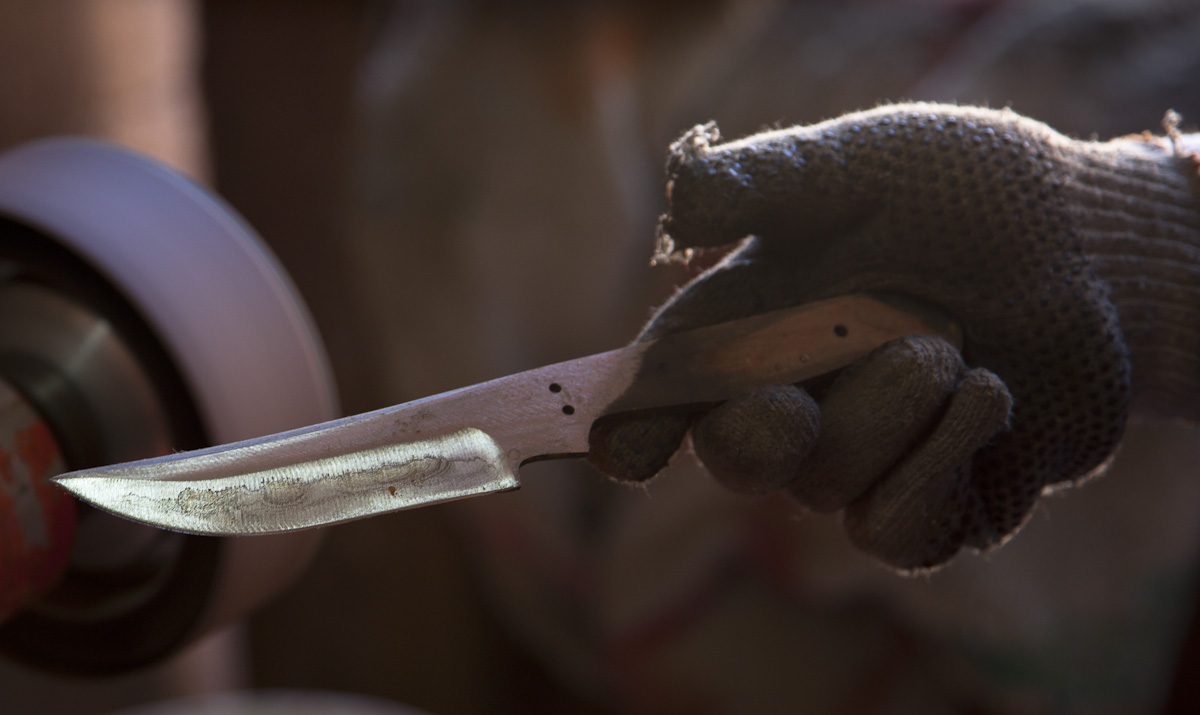
The blacksmith of Villa Union was a friend of my father’s. I used to watch him pound the red hot iron slabs into shapes of knives that he later hand-polished into shining steel blades. He would let me crank the blower to keep the coals hot.
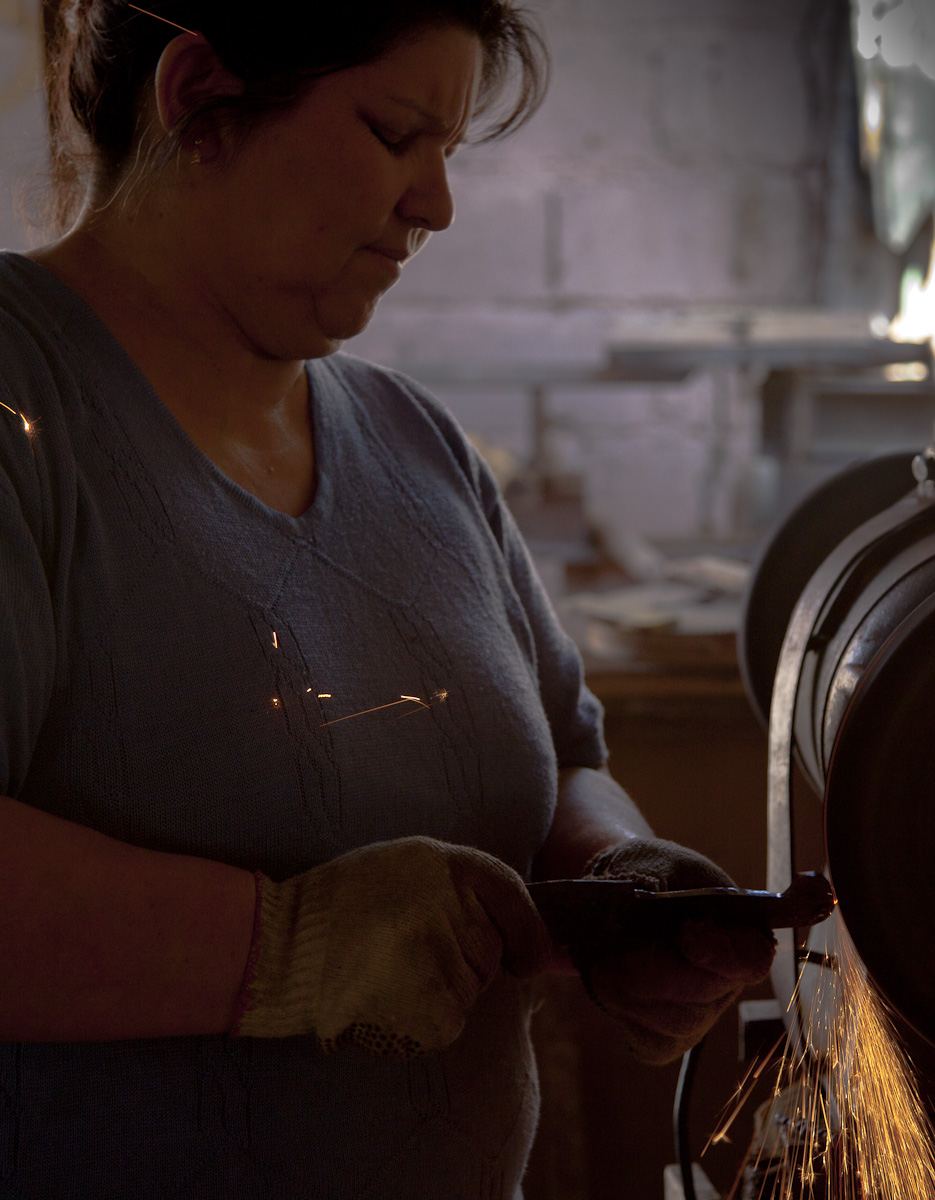
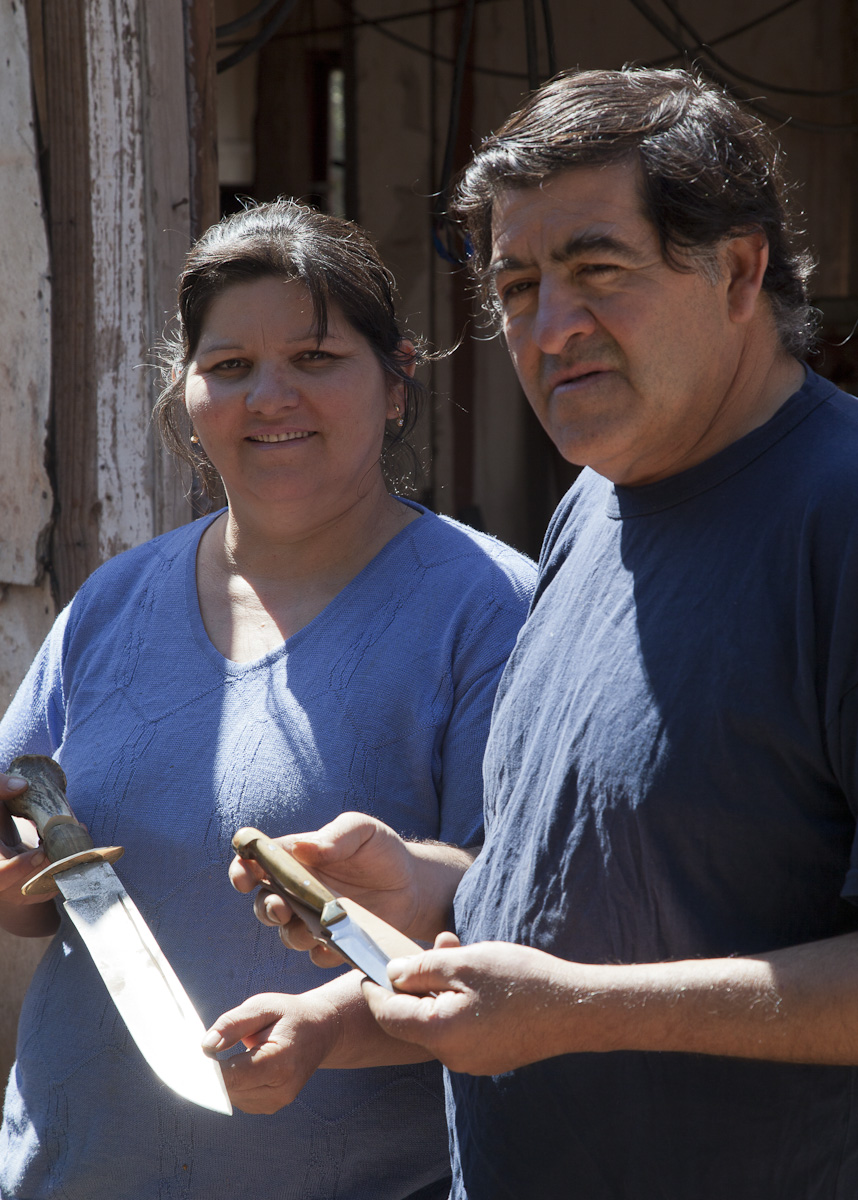
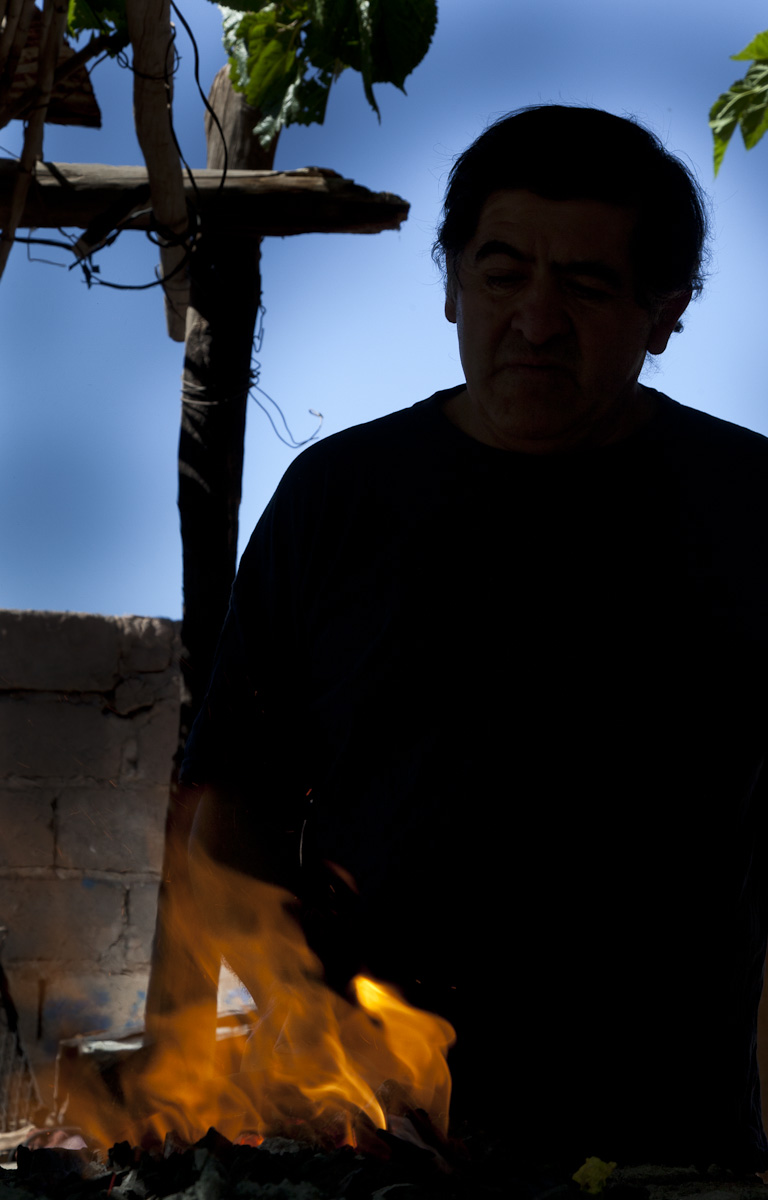 Now, Alfredo, the blacksmith’s son-in-law has taken over. (The blacksmith died 15 years ago.) He flips a switch, the motor hums and the coals glow hot. Alfredo never met my father, but he tells me about the other North American missionaries he met – I know all of the names. His wife, Miriam, who does all the finishing might have been one of the kids we played with very visit.
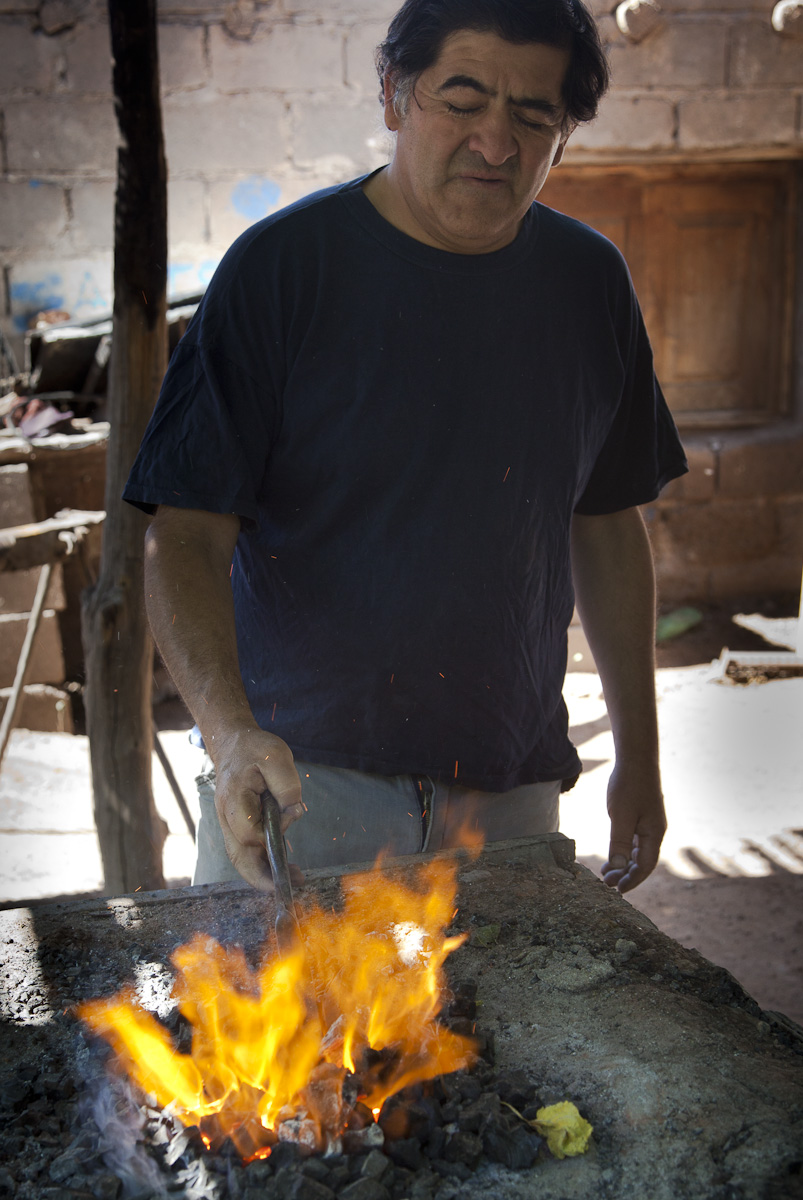 It was a combination of intuition and luck that brought us into the Cuchillos Artesanales storefront at Virginia’s suggestion. The forging area was behind, hidden from the street. It was the same as I remembered, outdoors, covered by a roof of leña held up by buried rustic posts.
The hunk of metal was now red hot and Alfredo began to pound it into shape. Steam vapors came off the metal as he cooled it in a bucket of water. He brought the knife over to the grinder and I watch the sparks fly. Step-by-step the black steel was transformed into a gleaming razor sharp blade.
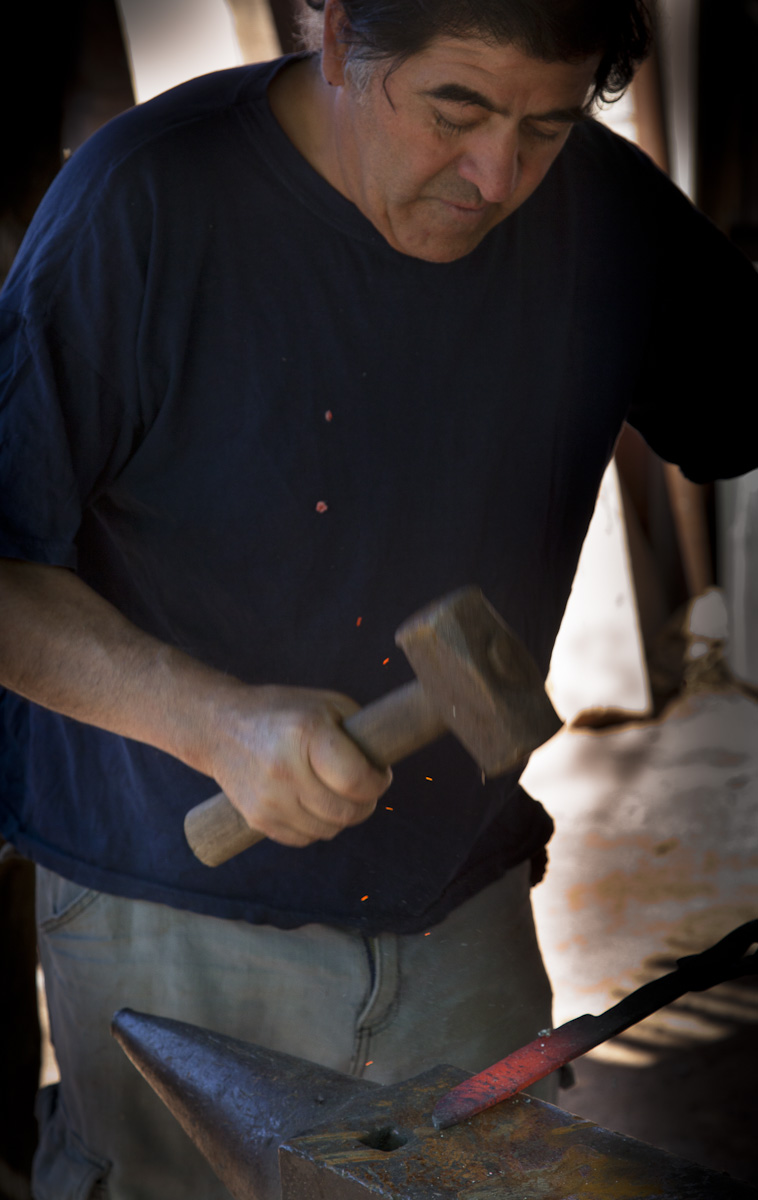 I used to watch this process over and over again as a 10-year old. The forging of the steel from slab to sculpted blad captivated me – the streaming fire of sparks, the red coals, the steaming metal – the entire transformative process was fascinating.
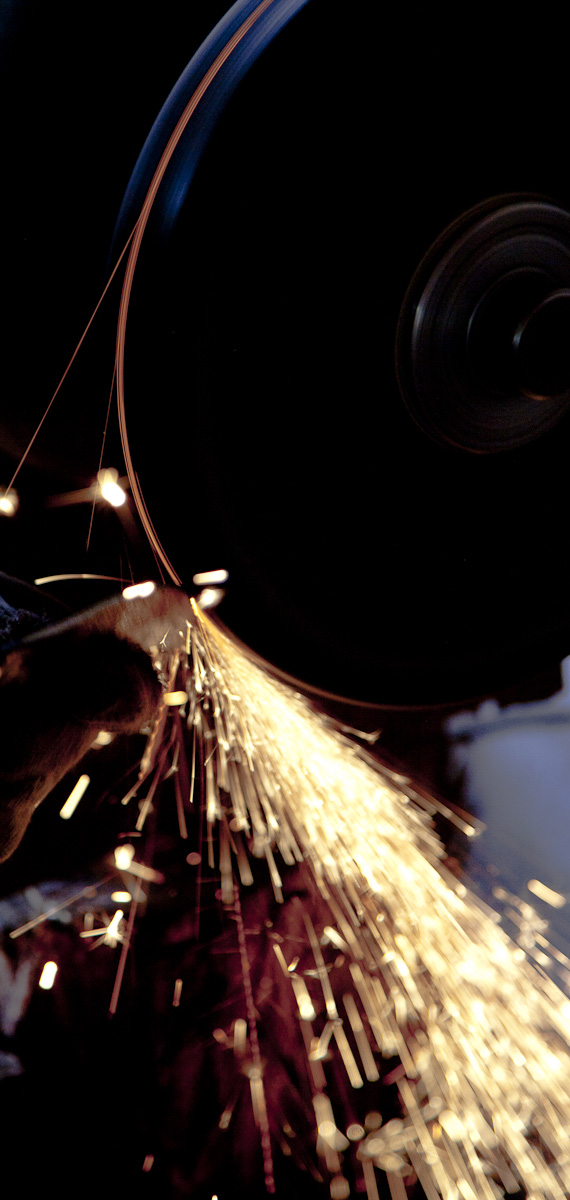
I think the idea that you could take something as ugly and useless as a piece of black metal and change it into a functional and beautiful object is what lead me into the arts and photography. No matter the kind of art being created, it involves a transformative process: idea to object, raw material to form, object to idea, and so on….
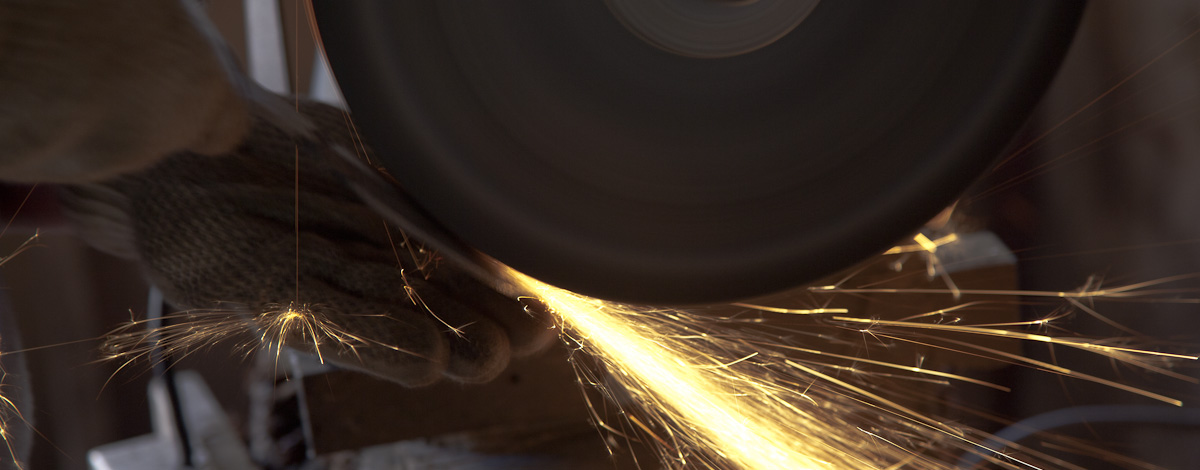
The energy of the process still captures my imagination.
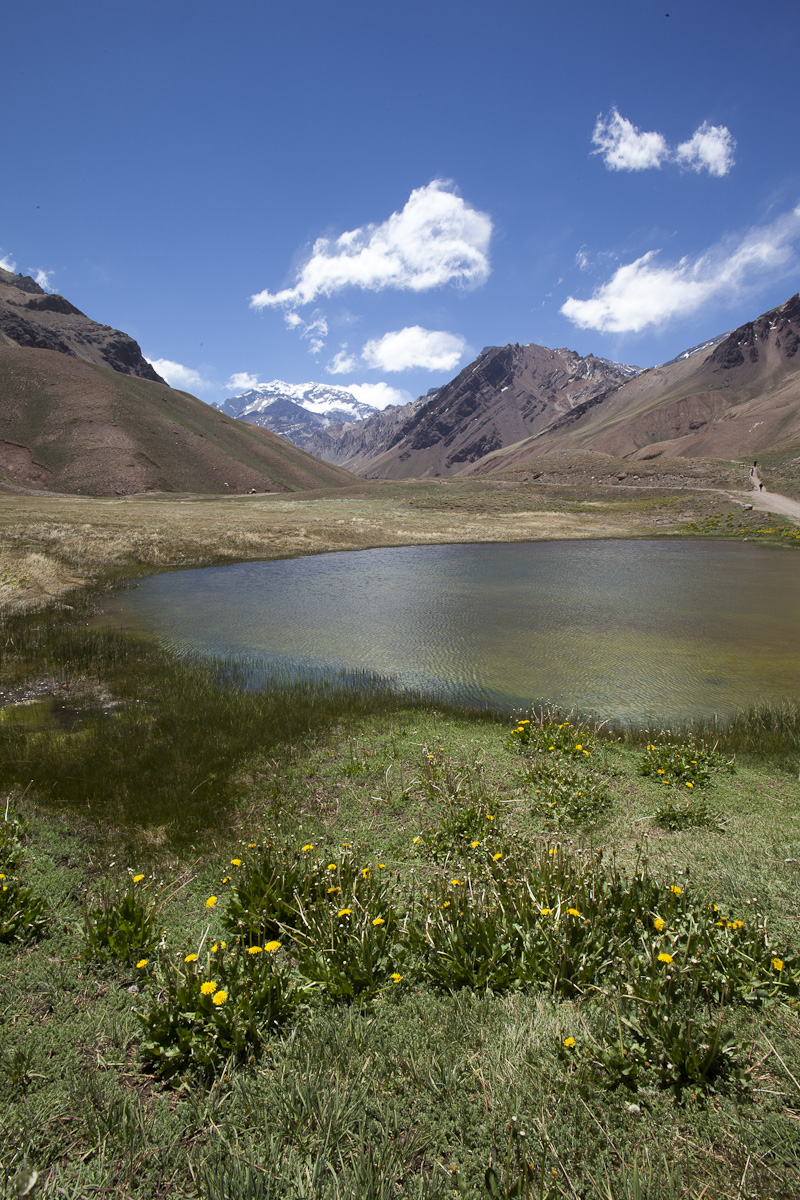
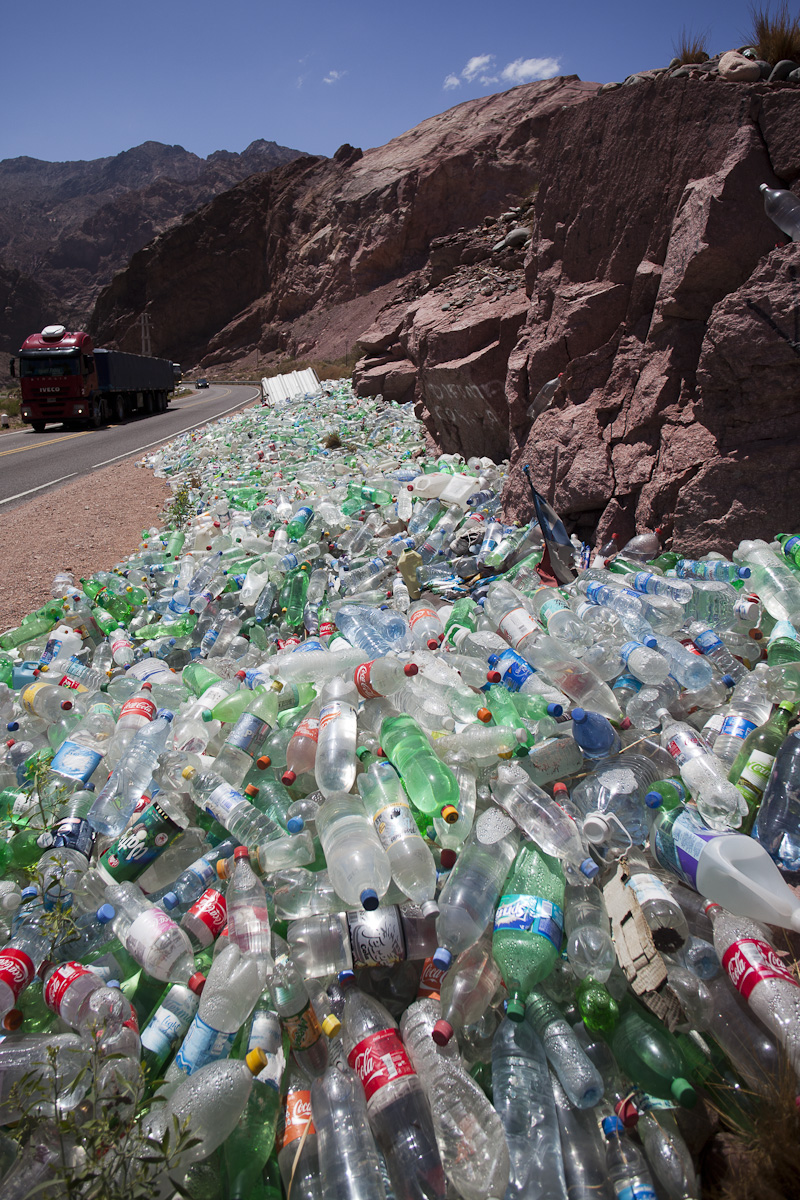
Life-long friends, Daniel and Virginia Serio, took me to the foot of Aconcagua mountain yesterday. It was a dramatic view on a spectacular day with sharp gusts of pure mountain air rippling across ponds of glacial water. On the way to the park from Mendoza we came across a puesto of La Difunta Correa, who could be best described as a folkloric Argentine saint who is called upon to assist travelers. The legend goes that around 1854 a woman tried to catch up with her husband, who had been forcibly recruited by the montoneros, carrying her infant with her through the San Juan desert. She eventually laid down in the shade of a tree and died of thirst while breast-feeding her baby who was found alive the following day. The tradition now is to leave bottles of water along roads in special alcoves in order to quench La Difunta Correa’s thirst and guarantee a safe journey.
I don’t know which site was more spectacular…and for the same reasons! Thousands and thousands of stacked plastic bottles of water sparkling in the afternoon sun, completely surrounding and overtaking the small religious stand….or South America’s highest mountain topped by a 300 meter deep glacier framed by emerald green grass and crystal clear water.
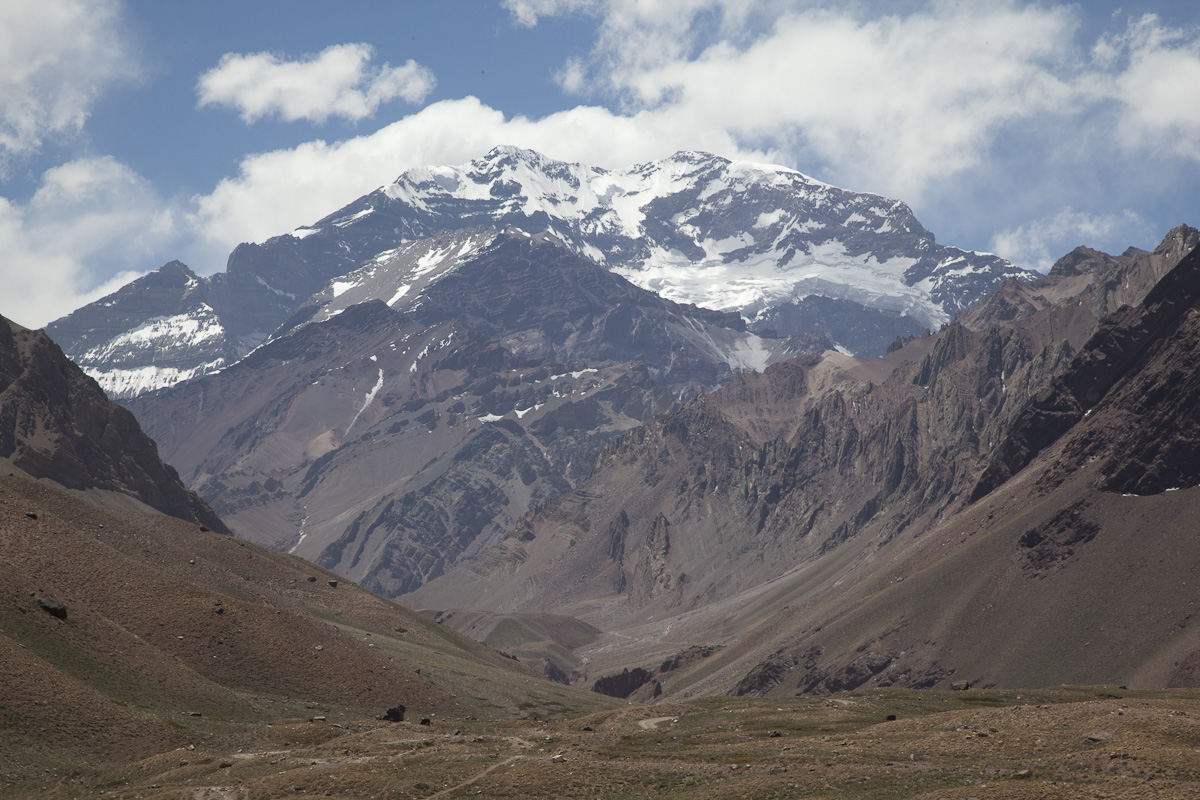
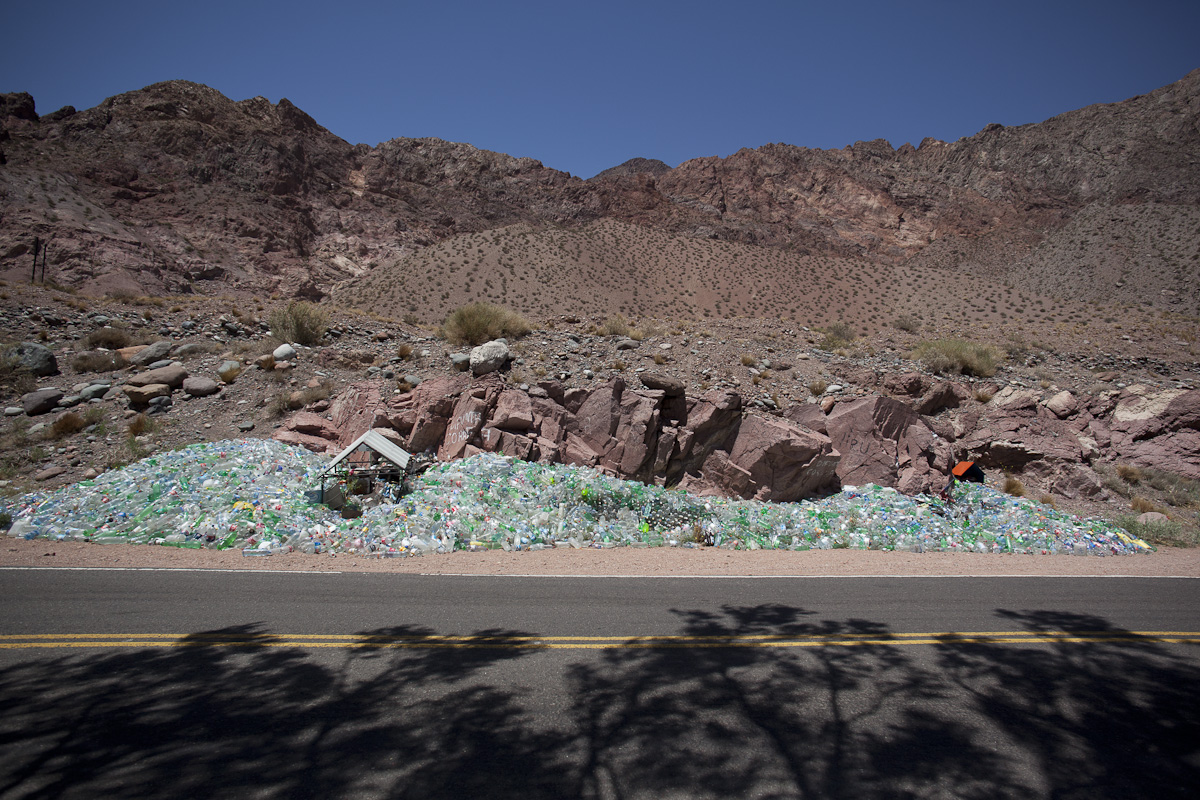
What photographer could resist either site? Both spaces are spectacles that have a hypnotic pull. So, Daniel (an exceptional mendocino photographer who I worked with in graduate school at the University of Iowa) and I go crazy, shooting every angle, composing, exposing, framing…and essentially applying the same aesthetic to both sites. A good photographer can take anything and make it interesting – that’s the challenge. I’m not really a mountain photographer and I don’t really know what I am going to use the images of La Difunta Correa for or what I want to communicate, but they will both go into my digital image library, cataloged with keywords and easily accessible. This is one aspect of the experience I wanted to address. There is a compulsion that photographers have to pursue the spectacle and define it their way. It doesn’t have to be as dramatic as yesterday’s events, but it is about isolating what is different – what is extraordinary – taking ownership by recording it. The camera can frame up the majestic chaos of geology and it can dramatize the random offerings of passionate devotees.
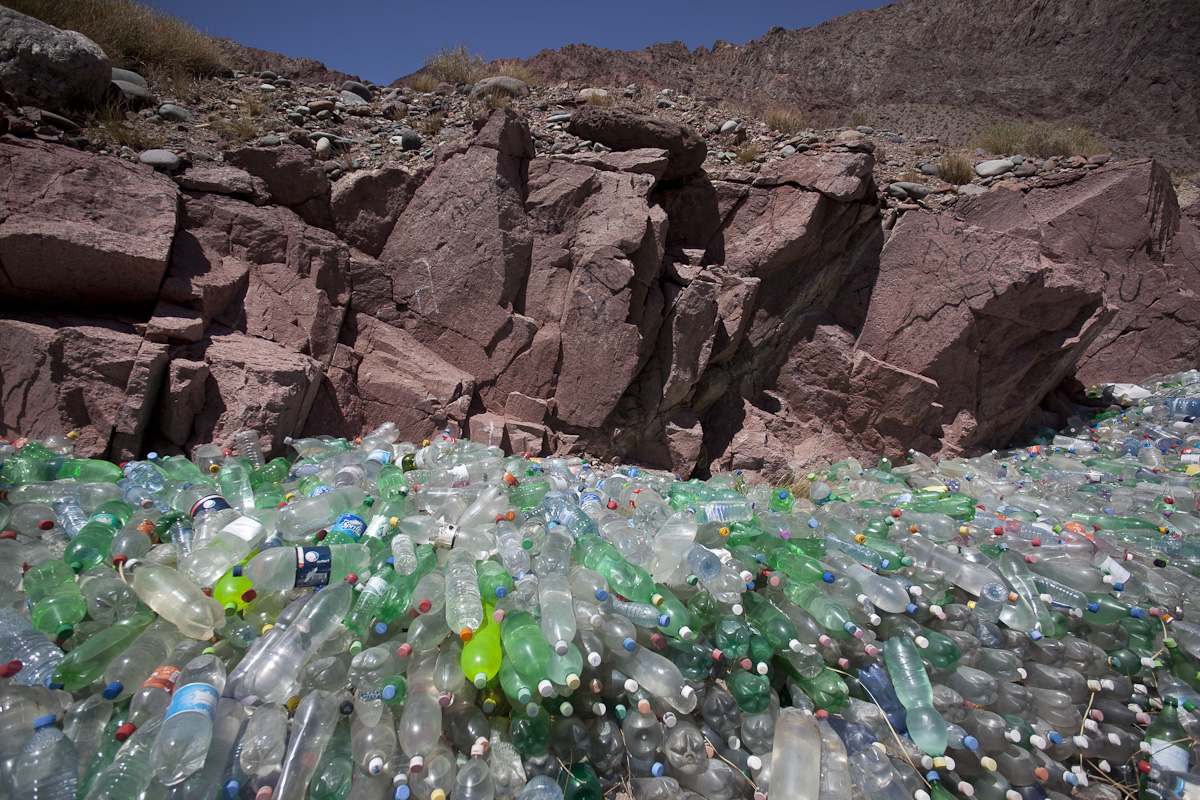
When I began to edit the photographs in Lightroom from the trip and saw them next to each other, then I made the connection between the power of the two spaces. One space is a collaborative art installation that is a mythical tribute to human persistence and the struggle to survive against the elements, while it simultaneously represents mass consumption, branding of the essential element of water, and the absurdly beautiful repetition of transparent plastic globes. The prolonged degradation of the plastic means the bottles will continue to pile up higher and higher. The geology of the mountain spans millions of years – it’s grandeur reminds me how fleeting my presence here is….as does the mountain of bottles.
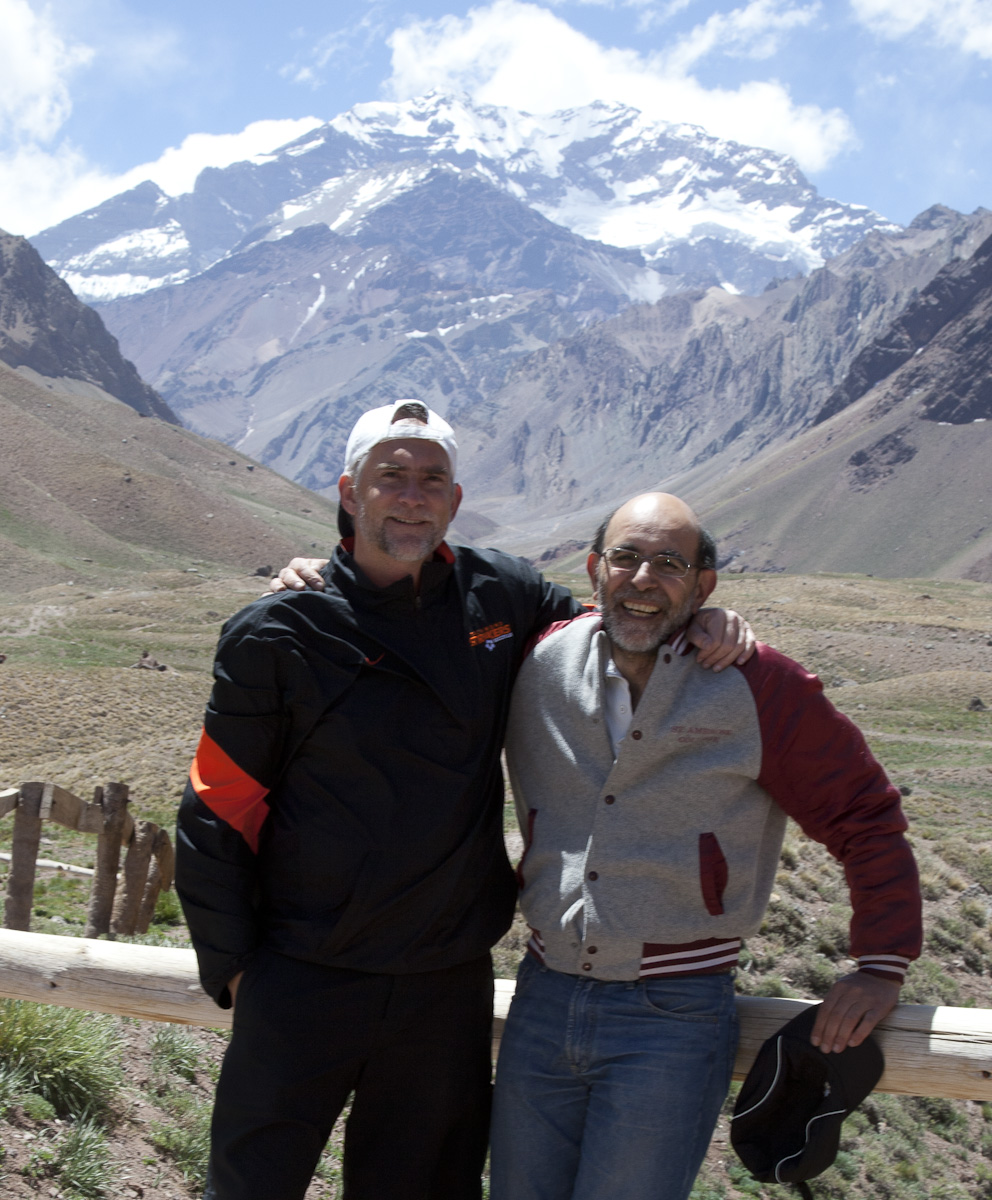
Aconcagua, with Daniel, December, 2011
 Fotonotes